Tag Archives: Donal Trump

Mr. Boomerang

graph 1 e1658146036565

Living on the planet means preparing for reactions from others that were not anticipated.

University students living in a states like Florida that officially shun the field of sociology will miss one of its most important lessons* First developed by Robert Merton, the idea of unintended consequences occurs when a result is the direct opposite of what was predicted.
                                      Denny Lyon

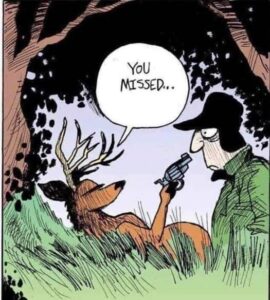
When working with human groups, unintended effects are bound to occur frequently. Who hasn’t made a seemingly innocent comment to a friend that unintentionally created hurt feelings? My own field of communication was often a beat or two behind sociology. But we are indebted to the concept, which we often call the boomerang effect. Because they deal with humans in groups, sociological studies were among the first to identify effects that are more or less the opposite of what a theory predicted. These outcomes are not necessarily unhappy but, rather, chances for insights on the challenges of tracking and predicting the workings of the mind.  One study I cited in my Sonic Imperative: Sound in the Age of Screens (2021) found that warnings to children about the dangers of earbuds that are dangerously loud often led them to actually increase the volume on their devices.  Go figure.

We know the logic well because a boomerang can happen to all of us: rodeo ropers who end up tying themselves in knots, apologies that go astray and intensify rather than reduce ill-feeling, friends who say ostensibly nice things that we take as demeaning. And there are those surprises when individuals who were supposed to be laid low by official criticism actually have their resolve stiffened.

Part of what makes a good strategic thinker is the ability to anticipate possible unintended consequences. To be sure, even the most successful presidents have been blindsided by outcomes they did not anticipate.  The Vietnam War under Lyndon Johnson is still a prime example of enabling a disaster that the nation sought to prevent. But in terms of the number of decisions that have gone off the rails, none come close to matching Donald Trump’s daily production of unwelcome surprises. The results would sometimes be laughable if the negative consequences weren’t so catastrophic for the nation.

The current stalemate and enhancement of Iranian power over the Strait of Hormuz is exactly the reverse of what he wanted. He surely did not intend to turn a second-rate power into a nation that could control a large segment of world trade. He also seemed to be the only one who was surprised by the decisions of the much-villified former allies for holding back on joining the ill-fated initial attack on Iran. Ditto for his efforts to woo Kim Jong Un, presumably to discourage North Korea’s nuclear ambitions. But after these kinds of overtures, the country invariably “test-launches” another long-range missile.

Or there are his attempts to encourage a dramatic rise in U.S. based manufacturing by raising tariffs on other nations. Yet government data indicates that spending on factory construction is actually falling. Trump seems the least capable of imagining how actions might unfold in ways that are not anticipated. This is probably because he won’t tolerate having genuine truth-tellers around him.

Trump’s tone deafness extends to the effects of his sometimes-caustic comments about groups or individuals. He may be the last to notice the growing hostility his denigration of woman reporters has triggered. To cite a familiar example, CNN’s much-maligned Caitlin Collins is now honored by many for her ability to ignore tasteless smears while asking the President challenging questions.

A more alert democracy would not tolerate a leader who so regularly demonstrates childish and gross incompetence. As in Britain, legal means replace failing leaders. Yet the President’s ossified congressional majority won’t use the constitutional tools available to them to remove him from office.

____________________

*For narrow political reasons, the states of Florida and Texas have decided to weaken opportunities to study “liberal” sociology at many of their universities, removing their courses from the core curriculum.


 

Picture1 e1518990242788

The Decline of the Dialogical Model

A common view of communication is that it is a process of exchange.  We listen.  We talk. The arrows flow in two directions.  Conversations become sustaining in ways that disembodied messages can’t match. 

                                                 Pixabay

With notable exceptions, the dialogical model of communication is in decline. The persistence of effort required in sustained conversations is in short supply. We find it harder to maintain the attention needed to hear what another is saying, struggling to engage brains that have been rewired to accommodate the pace of  the digital drumbeat. To get my car serviced, I now explain a problem while the service agent enters data on a screen with its own fill-in-the-blanks rubric. Many patients describe the same experience when they see a doctor. And even that minimal level of connection is lost as digital robots take over the customer service functions of more businesses.

Communal spaces designed to encourage easy exchanges between individuals now function as ersatz phone booths. The phones come out as individuals sharing a public space drift into their own informational worlds.  Devices of all sorts have become forms of protection against expending energy in direct engagement.

Even if fewer real bodies ever make it to our front door, our digital threshold is traversed all the time.  And so what is obvious is also consequential: the din of intruding messages are seen as welcome  opportunities to avoid the eyes of another who might expect a response.

Why does the retreat from direct conversation matter?  Innovations can enhance or disrupt our species’ innate inclination to seek relationships with others.  Some can serve as extensions of our natural tendencies for sociality: tendencies that show up in birthright impulses such as empathy and other-awareness.  But personal media often do the reverse as well, pulling us further away from the lives and experiences of others. Smartphones make it easy to mistake the disembodied fragment of another person for the real thing. 

Another sign of the decline of the dialogical model is how quickly we now fatigue of the effort required to sustain attention on another.  Communication has always had a performative function that makes us duty-bound to at least fake interest.  But for many, face time with another hardly seems worth even that minimal effort. Richard Linklater and others may write movie scenes featuring direct and revealing conversations.  That’s the method of his remarkable trilogy about a couple that concludes the film Before Midnight (2013).  But the rich conversational palette of his films stands in stark contrast to a world of Americans with eyes shuttered to the sensate world in favor of the small screen.

The favored pattern now is better represented with self-obsessed figures defined more by their strong interjections than their willingness to be a witness to others in the flesh. The preemptive rhetorical strikes of the President or a stand-up comic seem to reflect the times.  We now have many more models of figures who need to exercise their expressive urges as short judgmental rants. The President’s preferred medium of Twitter come across as shouts issued from a person unaccustomed to listening. They are the functional equivalent of the honk of an annoyed driver, a middle finger raised in a gesture of defiance, or a rant unleashed as a digital “comment.” Each is the same one-way form of communication-as-declamation.

All of this means that our expressive muscles get a workout, much more so than those tuned to the rhythms of another in an authentic conversation. To get conversational muscles back in shape and functioning again, consider a few modest suggestions:

  • Never give preference to a device over another person in the same space.
  • Ask yourself if your ‘screen gaze’ is becoming your public face.
  • See if you can find the time to hear another person out. 
  • Save the tough stuff for a face to face conversation, but… 
  • Find time to also talk about the fun stuff.