We speak. We write. We create works of art. All the while, we try to have confidence that the effects we intended will register with audiences. If it were only so.
In theory, communication looks so straightforward. When we address others we pass on what we assume are clear ideas with unambiguous meanings. We want to have confidence that the effects we intended will actually register.
Its not so easy. Shared meaning as a requisite of clear understanding is harder to achieve than we imagine. It turns out that we aren’t very good at transferring even simple information or individual preferences to others. Consider a simple case. A Huffington Post reporter noted that a Spanish language version of the President’s recent State of the Union Address missed a lot. In one case, where Obama used the phrase “I couldn’t be prouder of them,” the Spanish translation was, more or less, “I couldn’t feel masses proud of it.” It was a simple mistake, but anyone converting one language to another knows that perfect equivalency is illusive. All communication is translation. Even when the language remains the same, there is always an interpretive function which requires that the words pass through the filter of our experiences.
This doesn’t mean that we are always in a solipsistic fog. Some statements are relatively obvious and can produce a quick consensus. “Turn right” is not a vague command, but it can be ambiguous if the sender and receiver are facing each other. Similarly, statements like “He failed algebra in high school” or “She dislikes liver and onions” are mostly concrete and stipulative: two features shared with most kinds of mathematical statements. In math, common agreement about basic terms leaves little room for confusion. Yet, even moving to the slightly more complex task of naming simple objects can be problematic, especially if it’s the case that my idea of a “camera” is one that uses film and yours is the digital device in your phone.
These simple challenges with individual words are heightened when we scale up to the meanings of cultural products like a speeches, songs or movies. At this level the hope for uniformity of meaning pretty much goes out the window. For example, ask someone what songs on their music player, and you will get a list of favorites that are likely to be more personal than communal. What means so much to one enthusiast is often unlistenable to another. Young adults are especially tuned to hit the scorn button when they hear the favorites of older family members. I can still see my parents brace themselves for the inevitable taunt if I passed nearby when they were listening to completely uncool music. Similarly, in the presence of my favorites our children return the favor with polite silence. (Who could not love jazz played on steel drums?)
Finding widespread agreement on the significance of films is even harder. Many of us find it difficult to predict what a friend or family member will like. What seems so insightful to us can make no sense to others. Seeing someone’s growing puzzlement as you rhapsodize about a terrific performance can make the idea of “shared meaning” seem like an oxymoron.
The villain here is not just the tricky business of producing concurrent meaning. There is also an additional problem in the specific word that we often use when someone surprises us by their unexpected reaction to an apparently clear message. We often say that they didn’t get it: that they “misunderstood.” But notice what “misunderstood” implies about perspective. It suggests that the initial communicator gets to be the arbiter in deciding the authentic translation of an idea or thought. That sometimes makes sense. After all, it usually is their thought. But as an idea with a pretense to truth-testing, the judgment embedded in the word converts what is often a simple difference into an error. “Misunderstood” gives one side a free pass by putting the burden of a “mistake” on the other.
All of this should serve as simple reminder that meaning is naturally variable. Thankfully, dictionaries usually don’t get to have the last word. We are entitled to apply our experience to what we know and like. That we can’t predict with certainty how a person will receive our rhetoric is evidence that we have sensibilities which are different, but not necessarily deficient.
Television’s Shark Tank is less like being in the presence of really smart people than being the new kid at a tough junior high.
I’m struck with the apparent popularity of CNBC’s hit reality show, Shark Tank. The series features four or five investors who listen to proposals from mostly novice entrepreneurs asking for cash investments in exchange for a share of their new businesses. The product may be some odd form of ice cream, or a redesigned coffee mug that won’t leave a mark on a wood table. In truth, the new ideas that are pitched are less important than the reactions to them from the mostly male “sharks.” Their responses range from respectful doubt to over-the-top scorn. And, of course, its the bullies in shows like these that we tend to remember.
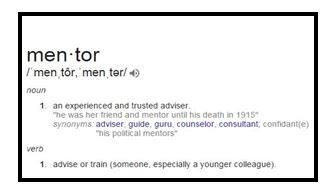
What’s troubling about our fascination for the show is that some of the “sharks” pride themselves on a kind testosterone-driven frankness that borders on cruelty. A few of the investors seem to cherish a style of drill-sergeant tactlessness over more supportive mentoring. And that may not be fair to drill-sergeants. Helping these novices seems less the point than humiliating them.
We can make too much of this as a trend. After all, heightened conflict is the familiar and mostly toxic formula of reality television. But coming from otherwise unremarkable people who’ve made some money by having money, the argot of growing businesses suggests nothing so much as an adult variation on the kind of school-yard bluster that sometimes came from classmates who were both aggressive and scared. Shark Tank is less like being in the presence of really smart people than being the new kid at a tough junior high. I hope it doesn’t represent a cultural trend.
This aggressive style applied to students is illustrated well in Damien Chazelle’s superb Whiplash (2014). Actor J. K. Simmon’s Oscar-winning performance as a faux-perfectionist jazz instructor is a perfect case study of how ruthlessness can turn a mentor into a crippled tyrant. Mentorship withers if it requires abuse of the learner. As the film suggests, the effects are likely to be more destructive than transformative.
Rhetorically, verbal taunts are often spoken to throw a listener off the scent of a phony. This is the use of language as “mystification;” It dares the listener to respond as an equal. Instead of help there is condescension. Instead of questions there are demands. Representative responses to individuals who want to franchise an idea often ring hollow as ostensible signs of true expertise: We know the language: “You’re nothing but dead meat to me,” “You’re not as smart as I thought you were.” “Grow up; you’re playing in the big leagues now.” One of the sharks in particular favors wearing the persona of a brilliant “money man.” He mistakes crassness for wisdom, and he prefers certainty over a true mentor’s acceptance of degrees of interpretation. Worst yet, the information-poor responses from these supposed wise men give off an unmistakable impression of some unjustified self-regard. “I have to tell you, my friend, that this is the worst idea I’ve ever heard. You don’t have a clue about how to set up a business or market a product.” After an evening of statements like this, it’s a surprise the money man’s suits still fit.
Another show on the same network features to restaurateurs who likewise spout clichés that were stale 50 years ago. “You’re an old dog and I’m here to tell you that you can’t learn new tricks.” This, after some predictable snafus in trying to build and open a restaurant in just two days. This can’t really be how we teach business acumen. What is lacking in all of these shows is the kind of compassion any person should expect when seeking help in reorganizing a small business.
All of this bullying is reminiscent of the stale harangues of men who have sublimated their dreams into a single soul-destroying passion to make money. Watching these shows is like sitting through David Mamet’s play Glengarry Glen Ross far too many times. On first viewing there is something bracing about seeing a kind of feral Lord of the Flies survivalism transferred to a modern sales office. But there is finally something disheartening about observing supplicants ridiculed rather than mentored. Perhaps a current trend needs to be reversed. It might be helpful to see fewer business people who have miscast themselves as teachers. They could be replaced by qualified teachers who could humanize the process of helping new entrepreneurs.