
The record industry (RIAA) officially opposes the use of copyrighted music for artificial intelligence, but industry practices are now firmly in the same business of reinvention.
You may have tried a quiz offered by several different social media sites inviting you to choose if a particular song is the work of A.I. or the real deal: a recording with real musicians. So far my few attempts to sort out fake from authentic pop songs has been no better than chance. Do I really have a tin ear? Why was I so easily fooled? It’s not impossible. But something else is at work. For years, almost all pop music has been run through so many “tools” and alterations that it’s unrecognizable from its original forms. Overproduced tracks that have been around for years are nearly indistinguishable from A.I.-generated tracks.
One cue is to listen to the bass-heavy beat that drones along unaltered. For a long time even “real” music has been using drum machines or “loop tracks” that lock onto a song and never change. Musicians don’t usually play that way. But synthesizers do, faking other instruments from digital samples that automatically repeat. And then another set of black boxes go to work on a singer who has a natural range that requires skillful adjustments at the top or bottom end of their musical range. No worries now about natural variations in a voice. Any less than perfect vocalizing can be tuned with pitch correction software. And we haven’t even talked about the extensive A.I.-like sampling used in hip-hop and other genres.
My point is that modern music has been so overproduced with studio effects that a singer’s natural performance has been obscured by endless “intelligent” circuits that have altered it. Modern producers and audio engineers can’t help themselves in their desire to make someone’s or some group’s natural sound even “better.” But that also makes them part of the problem. Pop music today is not simply a record of a single performance, but the result of labored audio construction that takes place in different places and at different times.
The twist here is that while the record industry (RIAA) officially opposes the use of copyrighted music for artificial intelligence, it’s practices are firmly in the same business of electronic reinvention.
Where We Came From
All of this more or less started with Les Paul. His tape-delay overdubbing and “looping” were early applications applied to a particular pop standard, “How High the Moon” (1951). This novel recording gave his partner, the singer Mary Ford, a performance twin heard just a fraction of a second behind Mary’s first pass of the song. New and novel Ampex tape recorders adding tape-delay pleasantly thickened Ford’s voice and did the same for the new pick-ups that Les used on his guitars. To reproduce the track on television a few years later Paul proudly revealed these new recording tricks of multi-tracking and tape delay that would change the course of modern music. I can still recall being among the millions of Americans being mesmerized by the sound when I first heard it, in my case, coming from a jukebox in a café in Leadville Colorado.
Paul and Ford were an amazing and creative performers. But I’m afraid Paul paved the way for music to begin its long downward decline to being radically reshaped by circuits in a box: a harbinger of what A.I. does. No longer did recording engineers try to faithfully capture what was captured by a microphone. They soon became participants in augmenting the sounds of a performer with all kinds of electronic add-ons. This continued with Elvis Presley using various an effect called slap-back delay. And nearly every record producer started using the kind of added ambiance, especially reverberation, pioneered by Motown and other labels. Today most pop singers also use Auto-Tune or pitch correction: producing real alterations of the natural variations common to even great singers. For some reminders of how straight “dry” recordings of performers sound like, listen to Frank Sinatra from the Capitol years in the 1960s, or, more recently, the pop-jazz singer, Laufey, who shuns most production add-ons. In the 1970s singer Karen Carpenter had an amazing voice and a broad range that was sometimes uselessly altered by unnecessary add-ons.
There are obviously many kinds of synthesizers that can add effects and sampled instruments on tracks: some “musical,” others uselessly intrusive. But the use of all mean that most pop recordings have been “enhanced” by layers of electronic devices that apply their own logics to a recording. The robotic line seems to be crossed when an engineer can preset an effect and simply allow it to alter the original acoustic sound.
 In addition, all of the software and hardware needs to be duplicated on prerecorded tracks to be used when a group goes on the road. Audiences usually want to hear the studio experience rather than what the logistics of live performance would normally allow. For this reason concerts are often a mix of live and prerecorded segments, a sore point for some fans who notice the contributions of musicians who are not even on stage.
We can marvel at the electronics that can be patched in to alter recordings. Few engineers seem to be able to resist. My point is that those temptations make the complaints of the popular music industry about A.I. uncomfortably close to their standard operating practice.
A final example. There is something a bit sad about accounts of how the classic Paul Simon album Graceland was put together. There are some wonderful tracks on it that replicate the experience of a live performance. But as Ashley Kahn recounts in Days of Miracle and Wonder (2026), individual songs were not assembled in a studio in South Africa or on a stage in Zimbabwe in 1987, but a few years earlier in studios and mastering suites in New York, London, and Johannesburg.


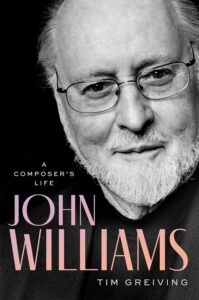 Media theorist Marshall McLuhan reminded us that one medium is not easily translated into another.
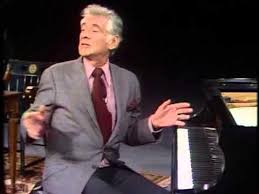 An easy answer is that words about musical form can enhance what we are hearing. Libraries of words about music can be vast and maybe compelling and revealing. That is surely what Leonared Bernstein thought in his famous 1973 Norton Lectures at Harvard. If there ever was a valiant effort to marry musical sounds with their meanings, these six lectures are it. It is no surprise that Bernstein leans heavily on what may be the slight cheat of using generative linquistics to bring its music to life. It suggests that music is just another “language:” a common but perhaps limiting metaphor that needs a harder look.
