Tag Archives: Susan Sontag

black bar

The Fraught Task of a Commencement Speaker

The trappings of commencement are meant to lift the spirits, but it is now harder to know what to say to a group of mariners setting out on unusually stormy seas.

Universities and their constituents have been wrung through the wringer this year. It seems like everyone from the President to their funding sources have weighed in on their supposed shortcomings: some, such as the tradition of favoring diversity goals, are totally fictitious, others, such as high fees to attend, are true. In this fractious environment what can an invited speaker say to those about to leave the protected shores of academia for the stormy economy that awaits? In better years  graduates who gathered in front of Old Main were giddy with high expectations, if not always prepared to hear the solemn words of a somebody at least one generation removed.

Lately, a college degree seems less of an achievement than a document testifying to endurance. And those young grads are obviously none too pleased with their country and the diminished job prospects in many fields that they will be inheriting. Recent reports of vocal “boos” from graduates being addressed by speakers from the tech world are a reminder that what should be a celebration now sometimes resembles a hostile crowd at a political rally. The threat of A.I. performing jobs in many industries is real for these graduates, who might have reasonably expected a degree of protection from the culture.*

Speeches are my business. And while the trappings of commencement and its music are meant to lift the spirits, it is now harder to find the right thoughts to communicate to a group about to step into the unknowns of work and life.

The most durable model for these speeches combined a sense of celebration with old-timey jeremiads about becoming too complacent too soon. The classic commencement speech almost always took the form of a secular sermon, even when the message was simply to hold on to the ideals and enthusiasms that are the birthright of the young. The writer Susan Sontag cautioned students at Wellesley to become students for life.  I like here writerly way of putting it: “Don’t move to the mental slums.”

Now, it is less apparent that these new graduates want to hear more from the generation that they believe—with some justification—has put the country in its present disarray.

The best advice to a speaker that I can give is to be brief, and to combine any warnings with a sense of positivity.  There goals are not mutually exclusive. Graduates should be urged to joyfully use the intellectual tools that they have acquired. They will need to prove their worth as critical thinkers and communicators. In my own case, stating this was easy. Given the Chairperson’s privilege of speaking to our communication majors in a smaller ceremony, I added a reminder that can apply to many fields.

Communication is not done with any of us. It will have its way with us for the remainder of our days. This isn’t a subject you learn and then move on. There’s rarely such a thing as perfecting a communication skill. . . For the rest of our lives we have no choice but to be students of the arts of working with others, ready for the next opportunity to make friends out of strangers and take the toxicity out of relationships.

In short, make this moment the start of using the intellectual tools and social intelligence you have acquired.

__________

*A music technologist addressing students at a commencement in Tennessee this spring offered one of the worst comments I have heard from a speaker: “The things you learned in your first year here may already be obsolete.”  Everyone at that institution should have been offended, since it suggests the presumption of a trade-school approach to a subject that is thousands of years old. Surely Tennessee’s program did more than explain how to use an outdated edition of some studio software. He was rightly booed.


two color line

The Great Appreciators

Informed criticism is clearly diminished as a cultural mainstay, in part because we have made it so much easier to produce and distribute simulations of cultural products.

This is an era in American life where the young seem as interested in becoming content creators than content appreciators. To be sure, this is a broad  and inexact distinction. But it is clear that a large segment of younger Americans today are ready to self-identify as musicians, songwriters, filmmakers, writers or audio producers, without much experience or training. The results are usually predictably modest: unplanned videos, under-edited and “published” books, magazine-inspired blogs, or derivative music produced in front of a computer.  Without doubt, serendipity has always had a place in producing wonderful new talent. But it is also true that more of us want to count ourselves as being a part of the broad media mix made possible with nearly universal internet access. It’s now hardly surprising to meet a middle schooler who edits their own videos or, after a fashion, curates their own web presence.  As You Tube demonstrates, self-produced media content is unmistakably popular.

If this first quarter of the new century is the age of the content producer, it seems that—broadly speaking—the last half of the previous century was an era for witnessing and reflecting on breathtaking talent. The decline of this impulse is a loss. An appreciator is more than a consumer. These are folks with an understanding of the history and conventions of a form, with an equal interest in exploring how new works can build on and stretch the most stale of cultural ideas. The best work of appreciators can be cautionary, encouraging, or fire us with the enthusiasm that comes with new insights. Productive analysis can help us fathom what we do not yet understand.

               Pauline Kael

In the previous century, critics and essayists of all kinds of art were ubiquitous. Periodicals and big city newspapers routinely published considered assessments of trend-setters in popular culture, fiction, television, theater and film. Some combined their pieces in book-length studies of the period that are still worth reading. Michael Arlen and Neil Postman wrote insightful analyses of news and entertainment television. Pauline Kael and Roger Ebert were among many popular reviewers producing novel assessments of films and the film industry. They were matched by music critics like Michael Kennedy, Dave Marsh, Gene Lees and Donal Hanahan, who provided appraisals of performers and performances. Their counterparts in the visual arts included writers like Robert Hughes, Walter Benjamin, and Jerry Saltz: all exploring the vagaries of talent and caché in that enigmatic world.

Among countless publications, readers poured over this criticism in the pages of The Dial, The New Yorker, Gramophone, Paris Review, Harpers, The Atlantic, New York Review of Books and Rolling Stone. And no self-respecting daily newspaper considered itself complete without its own music and film critics. Bigger city papers also added performance reviews of dance, along with the assessments from urbanists of a city’s newest additions to its skyline.

Even beyond obvious and daily samples of book and theater reviews in many Twentieth Century news outlets, there was an entire world of appreciators with appetites for reconsidering the rivers of culture that came from distant headwaters. For example, Gramophone was founded in 1923 by the Scottish author Compton Mackenzie, who understood that there was an appetite for essays about the composers and performers captured in the new electrical recordings of the time. He proved the unlikely proposition that many wanted to read about music almost as much as they wanted to hear it.

Criticism has Diminished as a Cultural Mainstay

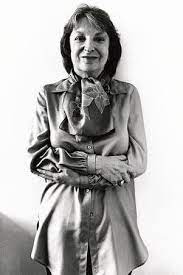
                       Susan Sontag

With video and digital media still mostly in the future, Americans in the first half of the century, had the time and the will to know the backstories of the cultural products of the day. Indeed, some writers like Norman Mailer, Susan Sontag, Joan Didion and Janet Malcom became intellectual thought leaders. They helped to explain what artistic mastery should look like. And they had the counterparts in a range of academic thinkers—T.W. Adorno, David Riesman, Marshall McLuhan and Kenneth Burke, for example—whose deeper cultural probes would soak into the fabric of the nation’s undergraduate curriculum. Sampling the output of so many professional appreciators would keep liberal arts students preoccupied for years, and sometimes forever.

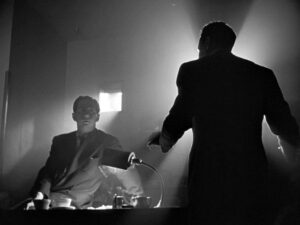
        Toland Image From Scene from Citizen Kane

To be sure, our interest in the understandings the nation’s cultural output has not vanished. But criticism is clearly diminished as a cultural mainstay, in part because we have made it so much easier to produce and distribute simulations of cultural products. I use the word “simulations” because the impulse to be a content producer often bypasses the intellectual labor that comes in value-added art. So many today proceed without a grounding in the canons of a particular form: its histories, possibilities, and innovators. I suspect the desire to be an immediate practitioner in a realm that is barely understood is usually fed by the promise of fame. The result, as my colleagues in film sometimes lament, is that students want to be producers of video stories before the have considered the durable conventions of narrative: for example, the norms of a written screenplay, or how this first written map is converted into the visual “language” and grammar of film. To cite a specific case, it would be useful for a young filmmaker to know how cinematographer Greg Toland used light and shadow to create the unmistakable visual palette of Citizen Kane (1941), or how Steven Spielberg and John Williams exploited the tricky business of musical underscoring to leave audiences suitably terrified by Jaws (1975).
In our schools and colleges, the equipment to make art is frequently made available to students who have only rudimentary understandings of how they might be used. The youthful conceit that progress is made by setting aside what has come before is mostly an excuse to avoid the work of contemplation that creates competence and a lasting passion for an art form.