Given the unpredictability of digital media producers, there is something reassuring about holding on to a hard copy of a recorded performance that is beyond their reach.
There is good news to report about how we use modern media. True, online digital media still dominate. The way things are going, we wonder if smart phones may soon be surgically grafted into the right hand. Even so, reports from a number of credible sources indicate that Americans are returning to an earlier pattern of collecting physical media: a change from the dominance of on-demand outlets such as Spotify, Amazon, Apple, or local libraries. There is nothing wrong with a lending system, other than their embedded and ever-accumulating fees. But physical copies of a document or performance are indeed having a moment. We are again becoming owners as well as borrowers.
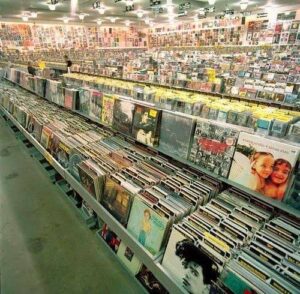
As is obvious, buying a “record” album has again become a thing. Vinyl record sales have been climbing steadily for the last 19 years. And CD sales alone have climbed almost 50 percent in the first half of this year. In addition, the number of new bookstores in the U.S. has started to increase again. More American consumers want media they can own, no strings.
The cases of CDs and vinyl recordings are especially instructive. Owning an original release by a performer or group is close to having a physical master of the music that was originally approved by all involved. The product is a fixed record of a moment in time, and in the case of new vinyl, sometimes marginally improved with better engineering and manufacturing.
As a private person, a record or CD is yours to keep and copy for personal use. Like many, my CDs end up downloaded to an easy-to access home server, in addition to a thumb drive feeding a second home stereo, and another one that sits in a USB port in my car. The only moral imperative here is to pay for the original performance. That keeps a person on the right side of the Digital Millennium Copyright Act, as well as the recording artists who rightfully expect compensation for their efforts.
The media giants have done a great deal to follow a “rent” model of use represented by e-library books or Spotify music lists. But both make a title impermanent. And to keep the music coming, streamers require a payment of a monthly subscription. For their part, public libraries will download books to borrowers without charge for a few weeks.
Films are slightly different. It may be enough to pay for viewing a streamed film once. Except for the most devoted, films don’t easily bend to the idea of multiple view playlists. But music is different. We learn new music and, in many cases, come to love it. A physical copy on hand is like furniture in our head that does not have to be rented or moved. With the right device, it is always ready to recreate the magic that a person may experience with each replay.
It is interesting that studios usually go to great lengths to preserve master copies of their projects. Some of those masters sit in protected warehouses or distant caves that guarantee their safety. The closest a consumer gets to a valuable piece of audio or visual art is their own shelf that contains what I think of as a kind of consumer “master” of a performance. Given the unpredictability of digital media producers, there is something reassuring about holding on to an original form of the product that is beyond the reach of later remastering.
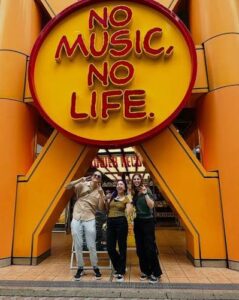
Sadly, we may never see the likes of Tower Records, HMV, or Virgin record stores again. But lucky is the city or town that still has a few bookstores, a record shop, and perhaps one of the 600 Barnes and Noble stores still functioning. Unfortunately, the original Tower Records store on Watt Avenue in Sacramento is gone. If had I spent any more browsing time there while going to college they could have asked me to pay rent. But they still do mail order and, if you are in Japan, there are several multi-level stores. As with so many things, the Japanese got it right. They have never waivered in their love of CDs and records.

 As a private person, a record or CD is yours to keep and copy for personal use. Like many, my CDs end up downloaded to an easy-to access home server, in addition to a thumb drive feeding a second home stereo, and another one that sits in a USB port in my car. The only moral imperative here is to pay for the original performance. That keeps a person on the right side of the Digital Millennium Copyright Act, as well as the recording artists who rightfully expect compensation for their efforts.
 It is interesting that studios usually go to great lengths to preserve master copies of their projects. Some of those masters sit in protected warehouses or distant caves that guarantee their safety. The closest a consumer gets to a valuable piece of audio or visual art is their own shelf that contains what I think of as a kind of consumer “master” of a performance. Given the unpredictability of digital media producers, there is something reassuring about holding on to an original form of the product that is beyond the reach of later remastering.