Nothing stands out more in the rhetoric of Donald Trump than his apparent pleasure in pitting Americans against each other.
Classic studies of the American Presidency always include detailed histories of the office’s rhetorical style. In the most visible office in the world form usually follows function. Presidents have always been called upon to find common values and beliefs that transcend regional and party differences. In the words of analyst Mary Stuckey, the nation’s leader is the “interpreter in chief.” His (and someday her) job includes finding the common threads of the American experience, then celebrating them in statements and appearances. Others in Congress may function as professional partisans. But the Presidency has usually found its natural buoyancy when a leader tries to speak for the entire nation. Even past Presidents swimming in private resentments usually managed to celebrate the American experience. Most have not strayed from their constitutional oath to “preserve, protect and defend the Constitution of the United States.” That includes not just honoring the independence of the press and judiciary, but celebrating the transcendent principles of tolerance and inclusion laid out in the expansive amendments to the Constitution.
Or so we thought.
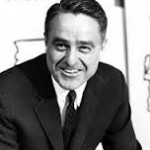
Nothing stands out more in the Trump administration than his seeming delight it pitting Americans against each other. To be sure, leaders have been intense partisans. We know from the record that this was true of F.D.R., John Kennedy, Richard Nixon and Lyndon Johnson. Johnson is an interesting case. The former Senate Majority leader from Texas was an old ‘pol’ in the classic sense of the term. He learned about the uses of power from Richard Russell, an unreconstructed southerner. But he also understood how long-standing problems of race and poverty could be acted on in ways that would bring out the best in Americans. His televised address to Congress in 1965 supporting the Voting Rights Act remains an impressive demonstration of political courage. In his slow drawl he reputed the racism of his mentor, embracing the promises enshrined in the nation’s founding documents. Here are a few pieces of that address.
"What happened in Selma is part of a larger movement which reaches into every section and state of America.  It is the effort of American Negroes to secure for themselves the full blessings of American life.  Their cause must be or cause too.  Because it’s not just Negroes, but really all of us who must overcome the crippling legacy of bigotry and injustice.

And we shall overcome."
It was an electric moment. Johnson spoke to our aspirations rather than our fears. The act that passed eventually opened up local politics, leading to more registered voters and many more African American office holders.
It’s hard to fathom the horrible fact that some news organizations must supply their own security at Trump events.
Trump’s instincts are much more personal and strategic. He seeks to celebrate himself more than the diverse corners of American life. He feeds long standing resentments centered on race, vulnerable new arrivals, Muslims and any number of corporations and sports leagues. Most shockingly, he regularly campaigns against a sacred principle of public life: the value of a free and vigorous press. He attacks the single feature of American political life that has been most admired and duplicated in emerging societies. His vile and dangerous claim that the press is “the enemy of the people” is stunningly unamerican. And from a more legalistic perspective, some verbal attacks at rallies approach the definition of felonious “incitement to violence.” It’s hard to fathom the horrible reality that at Trump events some news organizations use their own security people to protect their journalists.
What motivates a person who publicly loathes so many? If governing requires dealing with large segments of society that one finds distasteful, what rewards and motivations can exist?
One explanation from a psychiatrist writing in the New York Times doesn’t include a mental disorder, but a simpler habit of mind. He wrote that Trump has “a personality that privileges destructiveness and revels in the destruction of others and their ideals, whether they be refugees seeking asylum or carefully constructed policies that recognize the danger of Russian aggression.” He notes that the President is not a “broken man,” but one “fully in tact” who simply gains pleasure from wreaking havoc on basic presuppositions grounding both conservatives and liberals raised in certain protocols and traditions of governing. He’s an anomaly in politics, not to mention the hospitality industry.
Trump will someday pass from the scene. The more troubling problem is the mounting evidence that too many Americans seem to share his desire to destroy the values of liberal democracy.