Living on the planet means preparing for reactions from others that were not anticipated.

University students living in a states like Florida that officially shun the field of sociology will miss one of its most important lessons* First developed by Robert Merton, the idea of unintended consequences occurs when a result is the direct opposite of what was predicted.
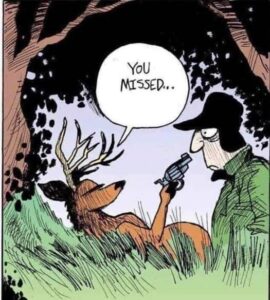
When working with human groups, unintended effects are bound to occur frequently. Who hasn’t made a seemingly innocent comment to a friend that unintentionally created hurt feelings? My own field of communication was often a beat or two behind sociology. But we are indebted to the concept, which we often call the boomerang effect. Because they deal with humans in groups, sociological studies were among the first to identify effects that are more or less the opposite of what a theory predicted. These outcomes are not necessarily unhappy but, rather, chances for insights on the challenges of tracking and predicting the workings of the mind. One study I cited in my Sonic Imperative: Sound in the Age of Screens (2021) found that warnings to children about the dangers of earbuds that are dangerously loud often led them to actually increase the volume on their devices. Go figure.
We know the logic well because a boomerang can happen to all of us: rodeo ropers who end up tying themselves in knots, apologies that go astray and intensify rather than reduce ill-feeling, friends who say ostensibly nice things that we take as demeaning. And there are those surprises when individuals who were supposed to be laid low by official criticism actually have their resolve stiffened.
Part of what makes a good strategic thinker is the ability to anticipate possible unintended consequences. To be sure, even the most successful presidents have been blindsided by outcomes they did not anticipate. The Vietnam War under Lyndon Johnson is still a prime example of enabling a disaster that the nation sought to prevent. But in terms of the number of decisions that have gone off the rails, none come close to matching Donald Trump’s daily production of unwelcome surprises. The results would sometimes be laughable if the negative consequences weren’t so catastrophic for the nation.
The current stalemate and enhancement of Iranian power over the Strait of Hormuz is exactly the reverse of what he wanted. He surely did not intend to turn a second-rate power into a nation that could control a large segment of world trade. He also seemed to be the only one who was surprised by the decisions of the much-villified former allies for holding back on joining the ill-fated initial attack on Iran. Ditto for his efforts to woo Kim Jong Un, presumably to discourage North Korea’s nuclear ambitions. But after these kinds of overtures, the country invariably “test-launches” another long-range missile.
Or there are his attempts to encourage a dramatic rise in U.S. based manufacturing by raising tariffs on other nations. Yet government data indicates that spending on factory construction is actually falling. Trump seems the least capable of imagining how actions might unfold in ways that are not anticipated. This is probably because he won’t tolerate having genuine truth-tellers around him.
Trump’s tone deafness extends to the effects of his sometimes-caustic comments about groups or individuals. He may be the last to notice the growing hostility his denigration of woman reporters has triggered. To cite a familiar example, CNN’s much-maligned Caitlin Collins is now honored by many for her ability to ignore tasteless smears while asking the President challenging questions.
A more alert democracy would not tolerate a leader who so regularly demonstrates childish and gross incompetence. As in Britain, legal means replace failing leaders. Yet the President’s ossified congressional majority won’t use the constitutional tools available to them to remove him from office.
____________________
*For narrow political reasons, the states of Florida and Texas have decided to weaken opportunities to study “liberal” sociology at many of their universities, removing their courses from the core curriculum.


 Anyone in an open society has the advantage of seeing what Putin and his nation cannot. One of the glories of an open society is that information travels easily and mostly unencumbered.
 France 24
 BBC (U.K.)
 Agence France-Presse (AFP)
 Associated Press
 MSNBC/NBC
 CNN
CNN
 NHK (Japan)
 Washington Post
 Reuters
 The New Yorker
 Deutsche Welle (Germany)
 The Guardian