It is an intriguing idea that we have a natural affinity for certain sounds, shapes and forms.
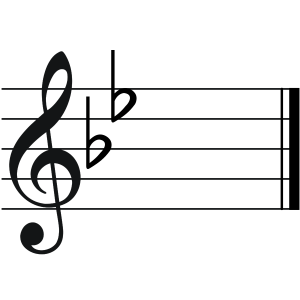
Perhaps you’ve heard the story about the attraction that the pitch of B-flat major has for humans. For years musicians and some scientists have speculated that this single note shows up as the home key in a lot music, as well as other non-musical parts of our lives. Is B-flat our homing frequency? What accounts for all of the major pieces of music written in this key? Is it an accident that a black hole in deep space seems to “sing” that note, albeit some 50-plus octaves below the pitch we know as middle C? Is it more than a coincidence that our electrical system “hums” at 60 hz (cycles per second), close to the audible lower octave B-flat? And should we make anything out of the anecdotal evidence offered by some that human structures seem to sustain sound especially well in the neighborhood of the same pitch?
Actor Ethan Hawke’s interesting documentary Seymour: an Introduction (2014) includes a passionate pianist who is impressed by how many composers were drawn to producing works in the key of B-flat major, including concertos and symphonies by Beethoven, Mozart, Bach, Brahms, Schumann, Prokofiev and others. Is it the perfect note: a kind of passkey that resonates with something inside, as the opening of Brahms Piano Concerto in B flat major.
A slightly broader question was asked by the composer and conductor Leonard Bernstein in the first of his still fascinating Norton Lectures given at Harvard in the early 70s (available on YouTube). He argued that the idea in linguistics of an “innate grammatical competence” that allows even young children to form sentences may have its counterpart in how we are “tuned” to the intervals that make up tonal music. The idea is that we already “know” a harmonic series like a triad of C, G and E without having to learn it. Any set of notes built off the overtones of a low first note always sounds “right.” We expect a simple musical work to find its way along what music theorists call the “circle of fifths” within a chromatic or diatonic scale.
To be sure, a more specific theory asserting a special affinity for a single absolute pitch has its problems. After all, Mozart’s B-flat was lower than ours. In his time the nearby tuning note of A was more likely to be around 420 hz rather than the more standardized 440 hz today. But it is an intriguing idea that we may have a natural synchronicity to natural sounds, shapes and forms. Think of how easily we associate music composed in a minor key as darker and more solemn. When a tune “resolves” in a major interval it tends to perk us up. We don’t have to be trained to notice the effect. Most of us are born into this world discovering that we have an unquenchable thirst to hear modulations of sound that build out from (and occasionally violate) music’s fixed chromatic intervals.
The motive to confirm a ‘hard-wired’ need is naturally interesting, leaving us at the doorstep of a theory of forms. Consider the rhyme that falls at the end of a second line of a poem; or the AABA structure of a pop song that so easily satisfies our expectations by delivering the “B” refrain; or the third act resolution of conflict that developed and festered in Act II. All are narrative forms that have become routine templates for thought. They sink their claws into us (or were they already there?).
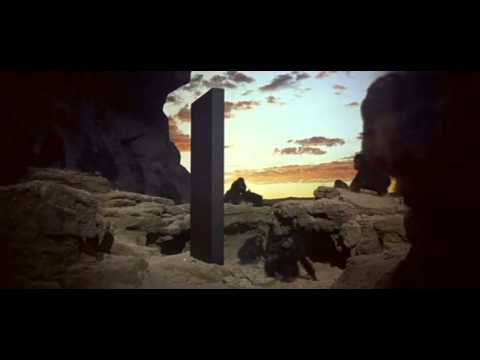
It would might take some magical thinking to identify a form that is as controlling on us as something like the inviolate laws of physics. Even so, the question of identifying perfect resonances–responses tuned to our essences as humans–is intriguing. We are usually better at naming specific human processes than single universals that may function as reliable North Stars. To be sure, religion fills this need for many. But it’s exciting to consider the idea of a physical property that exerts an enigmatic and irresistible pull. If we need a visual reference, perhaps form as “deep structure” is perhaps like the inscrutable black monolith in Stanley Kubrick’s 2001: a Space Odyssey (1968). The possibility that anything can be the organizing principle that animates the rest of our world is always exciting.