Sometimes a person comes up with the right words at just the right time: the result of good timing, a sense of irony, and an apparent simplicity that may yield a deeper truth.
Responses to others can be kind or cutting, playful or hurtful. They are at their worst when one of the parties can hide behind anonymity. One effect is that our political climate has become coarser and more toxic. It doesn’t help that our President seems to have no sense of humor.
Here are just a few favorites of the whittier kind heard from politicians, past and present, residing on both sides of the Atlantic.
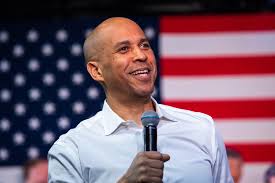
Presidential candidate Cory Booker is frequently asked about race as a factor in the current political climate. One recent response: “I’ve had lots of crazy things said to me, like, ‘Is America ready for another black president?’ And I’m confident it’s never been asked of a white candidate, ‘Is America ready for another white president?’”
[Nancy Astor and Winston Churchill had a notoriously rocky relationship in and out of the British House of Commons. Both were sharp witted and ready for a quick retort.] Churchill once asked her for some advice on how to proceed in the House of Commons. She responded with a simple “Why don’t you come sober, Prime Minister?”In another exchange that supposedly took place at a party, Lady Astor said to Churchill, “If you were my husband, I’d poison your tea,”to which he responded, “Madam, if you were my wife, I’d drink it.”
[In a recent exchange in Parliament the loquacious MP Anna Soubry dressed down government minister Michael Gove over his support of Brexit. She ended her statement with a pointed question, to which Gove responded,] “The right Honorable lady is a distinguished criminal barrister. Now I know what it is like to be cross-examined by her. But I also understand why Lawyers are paid by the hour.”
[President Obama loved to work with writers to come up with quips for the Annual White House Correspondents Dinner. He seemed to enjoy sparring with journalists, perhaps because he was a successful writer before assuming the Presidency. He also relished quips playing off of absurd Republican assertions about his personal history.] A favorite: ”These days, I look in the mirror and I have to admit, I’m not the strapping young Muslim socialist that I used to be.”
And there’s also this: ”The fact is I really do respect the press. I recognize that the press and I have different jobs to do. My job is to be President; your job is to keep me humble. Frankly, I think I’m doing my job better.”
John Kennedy won the presidential election in 1960 by a close margin. Charges during the campaign that his wealthy father was rigging the result led to this observation by Kennedy, delivered in his usual understated style: “I just received the following wire from my generous Daddy: ‘Dear Jack, Don’t buy a single vote more than is necessary. I’ll be damned if I’m going to pay for a landslide.'”
Congress is the best example of the price we can pay when the rewards of public performance are greater than those of private negotiation.
Most Americans continue to focus on the broken Presidency. Even so, no one looking for a model of governmental efficiency would get much comfort from a good look at the American Congress. Its twin failures to produce effective public policy and work with the President offer cautionary truths about how not to communicate to produce effective action.
The impeachment process is an aberration, if a necessary one. But the bipartisanship that characterized the Nixon impeachment is missing. It’s also true that this President does not think of himself as a true partner with the Congress. That’s obvious now, but even in prior years he showed little interest in helping to shape legislation.
All these caveats don’t fully explain why the two deliberative bodies within the Capitol are examples that no country wants to emulate. And there are a few more. There is some cooperation at the staff level, and examples of effective bi-partisan cooperation are occasionally on display, as with the passage of several jobs and tax bills in 2012 and 2015, and in recent bipartisan condemnation of the President’s withdrawal of support for the Kurds in Syria. But the oft-heard cliche is now true: Congress is a broken institution with public approval ratings to match.
While this branch of the federal establishment was not designed to work with the efficiency of a parliament, where a head of government is chosen from the party that wins a plurality of seats, congressional dysfunction now leaves so much on the table that needs to be addressed: everything from immigration reform to timely allocations of funds for infrastructure improvements. We knew this institution was in deep trouble recently when in 2013 a sizable number of members were ready to risk a government default and the dollar’s status as the world’s reserve currency: all for the purpose of pressing a dubious ideological point.
Members note that they no longer the case that they socialize after work or even share a meal while in session.
What’s wrong? What best practices for communicating in organizations are routinely ignored? Briefly, some of the overwhelming problems on Capitol Hill have their origins in two ineffective communication patterns.
The first is that the body is obviously and hopelessly organized into factions—notably parties, special interest caucuses, and their media—making it likely that members will only work in groups rather than as a whole. Since most of the process of legislating is done away from the floors of the House and Senate, it falls to party leaders, whips and members to work out in private and with their own caucuses what they will accept by way of a legislative agenda. Differences of opinion have fewer chances to be moderated in environments that would encourage conciliation. The founders feared this hyper partisanship for good reason. Indeed, Senate Leader Mitch McConnell moves so cautiously in his narrow partisan lane that it can be hard to tell if his image on a screen is a still photo or video.
This problem is compounded by a long tradition of individual offices set up as separate fiefdoms and spread over four buildings on the east side of the capitol. One wonders how different legislative life would be if the 100 members of the Senate worked in the conditions known to most of white-collar America: in the same ‘cubicle farm’ spread over one floor. Support staffs who enable the isolation of members could be moved to lower floors. This would encourage more discussion across party lines and more functional coalition-building.
A second problem is the changing character of those seeking high public office. In the age of the internet and 24-hour news there seems to be more interest in the expressive possibilities of serving in public office than actually doing the work of governing. The requirements to continually raise campaign funds and screen time are all-consuming.
In the lore of Congress there has always been an expectation that the “show horses” would sometimes win out over the “work horses.” A retired Lyndon Johnson once complained to a CBS producer about the “pretty boys” created by the growth of television. The former Senate Majority leader’s point was that visual media gave rise to a new breed of members more interested in the theater of politics than finding ways to bridge differences.
Congress is simply the best example of the price we can pay when the rewards of public performance are greater than those of private negotiation. So it offers some cautionary reminders to the rest of us working in complex bureaucracies. First, we can’t afford to isolate ourselves from others we expect to sign on to our initiatives. Leading effectively still means using communication to build and sustain relations with those who have different views. In addition, since its a solid axiom that we more easily find comity in small groups, trying to forge leadership from large bodies needs to be seen for the problem it frequently is: the organizational equivalent of trying to get even a few dozen college professors to form a single straight line.