
Real-world communication is more about expression, not problem-solving.

Most of those who are weighing in on the potentially disastrous effects of A.I. have allowed their focus to become too narrow. Bad effects are usually overestimated because of an error in thinking. The mistake is to assume that A.I. is mostly about being an “intelligent problem-solver,” forgetting that human instruments of communication and contact involve so much more.
Granted, digital systems handle data better than most of us; and for that we should be grateful. But even in recent years we still spend hours correcting the actions and content of advanced bots that are ostensibly good at manipulating data. Think of all of the supposedly smart algorithms that often deliver nonsense to what amounts to inaccurate versions of ourselves.
But here’s the bigger problem. Those talking doom to us are mostly listening to engineers. And engineers tend to see communication in terms of “problems and solutions” driven by “powerful intelligence.” They are interested in what circuits can do; less so in what they try to say. And any tool with a circuit at its heart is bound to come up short in grasping true intelligence. For example, A.I. output is not going to be meaningfully informed by specific instances of social intelligence arising from our passions; or a sense of kindred identification felt by humans (a non-quantifiable but real effect); or one person’s knowledge of another’s complicated backstory.
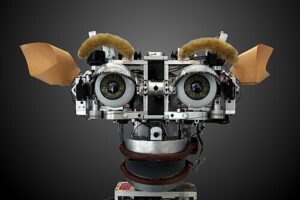 In addition, real-world communication is more about expression, not problem-solving. In fact, a person’s or a machine’s problem-solving efforts might be, for many of us, the least interesting thing we could note about them. Instead, we want to know who another person is, their sense of place, their feelings, attitudes, experiences, values, and their skills at reading behavioral cues, as imitated by MIT’s old “Kismet” Robot.
All is well with A.I. until real-world events intrude. If a person wants us to know that the president is “a moron,” or that Congress is “worthless,” we are ready to react using our own sets of attitudes set on our own terms. Through language humans carry a lifelong license to judge. We are naturally motivated to discuss opinions, assertions of a critical nature, and facts in dispute. We know these central artifacts of everyday communication because our language requires it; its natural state is to have tendency. We utilize deep reservoirs of terms that match how we feel and attitudes we want to share. A modern dictionary can offer 65 alternate terms for the simple adjective, “clever.” Almost as many for “moron.” In everyday discourse, wording choices matter because they reveal pieces of ourselves and how our thoughts have been shaped.
It is thus the nature of human communication to use expressive language that our brain’s natural plasticity allows. Setting out on a quests for the most “intelligent” solutions? Not so much.
“It” and “I”
This language of evaluation is revealed in the use of the pronoun “I;” we expect whatever is said to be a representative artifact of a speaker’s or a subject’s life and history. Even the simple statement “He is a good friend” gives us a lot of social terrain to unpack. Among other things, there is an implied “I.” The statement may seem to be about someone else. But it is also about the speaker.
So where is A.I. of various sorts in all of this? It is mostly irrelevant, since attitudes and feelings are uniquely human. “It,” or a cute name as a stand-in for a generative A.I. system, is completely opaque. To be sure, A.I. can surely fake an attitude, though some chatbots are programmed to beg off. And artificial humans can simulate painting a picture, composing a pop song, or writing a poem. In those forms we can expect all sorts of bits that are derivatives of what were once real human acts. But most of us are pretty good at sorting out a simulacrum of human expression from the real thing. Indeed, even “smart” A.I. has no agency. Any attempt at sentience is still a machine mock-up that pretends to create thoughts derived from . . . what exactly? An organism has a substantial biological and social history. We are the products of layers of experience over decades. And that means something. Among other things, humans, carry the foreknowledge of a finite life cycle. That alone alters our expressions and decisions in ways that are beyond calculation.
To come down off of the doom cloud, it is important to remember that the passion that sits at the heart of most expressive communication flows from the natural impulse to meld perceptions of our life history into a unique and expressive self. Personal language is a kind of fingerprint: special to us and not to others. I may want a calculator or a spreadsheet to carry out computations. And I’d be pleased to have A.I. weigh in with a second opinion on a serious medical diagnosis. But most of the time we thrive on expressive rather than data-driven instrumental communication. We continually insist on offering verbal tokens of ourselves to be read as part of a unique persona. We typically use our rhetoric to perform and display the products of our personhood. So we can have an A.I. letter sent to a close friend. But it cannot construct an authentic history of prior interpersonal contact that would be in a personal note. It follows that persons should want to protect their rights of authorship. Why would anyone settle for an assemblage of off-the-shelf expressions that will be blind to the sender’s or receiver’s unique natures?
