
A solid new book suggests many pathways for pursuing the origins and forms of human consciousness.
Several years ago I wrote a book on intentionality, claiming that it was a subject that rhetoricians needed to tackle, since our responses to others are usually tuned to what we assume are their motivations and levels of understanding. The details of their lives will determine how we approach them, including what we might want to leave unsaid. The same sorting out of motives and likely attitudes is used in trials where a juror may need to consider the differences between accidents and more willful behaviors. And most parents may be forced to wonder if their child knew what they were doing when an innocent prank went wrong. As the saying goes, “what were they thinking?”
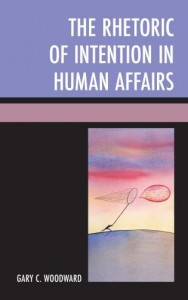
The point of my book is that we can’t escape the assignment of motives in others. But I had not gotten any further than the first chapter before I walked into an open manhole. Given the notorious challenges of knowing another’s mind, how was I supposed to make sense of something as basic as another person’s intentionality? What kind of mind-reader would I have to pretend to be? In the end, my rhetorical perspective saved me. My book was going to be about the ways we talk about the motives to others, sidestepping the question of what consciousness is and looks like. It is easiest enough to say that “I know what he was thinking,” or “I thought this is what he would say.” But to truly know it is another thing altogether. Consciousness itself is as vast as outer space, but at least our human efforts to discuss what we think other people are thinking is frail but more manageable. So my project was saved for those few interested in exploring The Rhetoric of Intention (Lexington, 2013).
A much thornier task and one I was happy to avoid is the very nature of sentient thought. We have feelings, imaginings, fears, emotional reactions, and an abundance of experiences that shape the defining features of our essence. How do we create a consciousness? Is the study of the brain the right pathway? Or, as some believe, do we need to think in terms of individual traits of mind that have been hardwired since birth? A quick answer is that we still do not know where the seat of consciousness is, but we will need to make some estimations, especially in the age of A.I. We know we are active agents with feelings and attitudes. But we don’t necessarily want to take on the added burden of being concerned about the feelings or thoughts of a robot.
A Fearless Explorer of the Mind
 It is fortunate that science writer Michael Pollan has gone down that dark hole that I avoided, exploring the mental and physical processes that allow us to have thoughts. What do we mean by consciousness? Why do most neuroscientists resist dealing with it as an idea loaded with significance? It is relatively easy to describe the mental processes of awareness, which have well-traveled routes from our sense organs certain parts of the brain. In everyday language, our sensory equipment feeds information to the brain that we process as sound, light, smell or touch. That’s partly what researchers call the “easy part” of looking at consciousness. The phenomenology of physical experience depends on all of the receptors within us. Part of the “hard problem” for consciousness theorists is how feelings, imaginings or impulses are formed without apparent external stimuli or a single internal location. This puts us in the realm of imaginings, fantasies, stray thoughts, and the origins of our own intrapersonal communication. As Pollen points out in this well-written study, how do we study consciousness if consciousness itself is a necessary precondition? And what does it mean that we make ourselves aware of “counterfactuals,” meaning conditions miles away from our own lived experiences? We are a species that worries about what we can imagine but do not understand.
Pollan makes clear in A World Appears (Penguin, 2026) that modern science mostly studies the brain. Neurology is built on the study of chemical and electrical transmission of our living self and its organs to various brain locations. But this area of science grapples less often with the idea of the mind, which owes more to thinkers working in the humanistic traditions of philosophy than strict clinical and physiological processes of cognition. The differences are pretty clear. We can hear a record and trace the audio path from the source all the way to the Organ of Corti in the inner ear, and then on to the auditory cortex. But what is going on when we “hear” music as an “earworm,” the quaint name for a segment of an old or unknown tune that we can’t get out of our consciousness. Recent experience is one answer. But like me, you are probably dealing with earworms that you heard as a child. Beyond, that, of course, you have “feelings,” “attitudes” and maybe even fears to consider. Experience probably feeds most of these thoughts. But where is such experience held, since functions of parts of the brain are rarely as exclusive as is suggested within neuroscience? It is also clear that we engage in “streams of consciousness” that easily drift far beyond what we know. Our consciousness roams, as an “unstoppable stream of thoughts and feelings and facts bringing irrepressible proof of life.” As one theory has it, perhaps consciousness is our keeper of the flame for the self, knowing that our mortality means that we need to find our place on the melting floes of life.
Pollan divides the book into sections on sentience, feelings, thought and self. As to the last category, he is in good company with the many theorists of human psychology and the “social self” in identifying our own tenuous anchors to the world around us. In all, Pollan considers about twenty different theories of consciousness, careful to not settle on just one. My own favorite was to root most consciousness in language. To name is to think, or something like that. But Pollan notes that language areas of the brain severed through accidents do not seem to prevent the interiority of consciousness. He speculates that perhaps we have overlooked the rest of the body as housing some of the mechanisms for thinking and awareness.
It would seem that a focus on the idea of self would help bring the nature of consciousness into focus. But Pollan runs into as many questions as even tentative answers. He notes that we are probably wise to follow Scottish philosopher David Hume’s point to look for the self in experience. Faith and logic can whither quickly without reference to the phenomenology of our own lives. Trying to understand our interiority by leaning on the a-priori categories of neurology may not be enough to yield insights about our unique repertoires of cognitive habits.
Perhaps the biggest surprise in the book is Pollan’s easy acceptance of the idea that most living things are sentient, meaning able to adjust their responses to fit the world around them. He is a plant expert and eager to share details on just how adaptive vegetation can be to its surroundings and threats. I’m not so sure. I think sentience includes considered action, a phrase that–like everything in this study–depends on how much meaning we can load into everyday language. If it does not quite make sense to ask what plants “know,” it may be because our pathways to insight start from very different places.
Pollan’s inquiries into various theories and research in A World Appears don’t always hold together. But the overall study is clearly the product of an active mind. He is excited about the topic, and his book passes that enthusiasm on.
Talking with Pollan about his wide-ranging exploration, the New York Times’ Ezra Klein notes the continuing dilemma that haunts one of the most central human traits:
 Here’s the paradox of our consciousness: It is the only thing we truly know — and the only thing we have actual firsthand experience of. Yet we don’t understand it at all.
We don’t know what it’s made of. We don’t know how it works. We don’t know why it exists. And the closer we look at it, the weirder it gets. The more we try to describe it, the more our language begins to fail.
All true, and all the more reason to sort out the complexities of a core idea worthy of its challenges.
