This is the realm of the problem-solver, the creator, the owner of a consciousness that will discover and understand what a fragmented thinker may never find.
By definition, a distraction is a detour. It happens when the continuity of some effort is broken by the need to shift attention elsewhere. Since this website is dedicated to communicating in “the age of distraction”—be it advertising clutter, too many texts and e-mails, or the frenetic pace of overscheduled lives—we should have an interest in persons who resist all the cultural noise.
One answer to this problem is to discipline ourselves to follow a more linear pathway, even though cultivating this kind of thinking cuts against the grain of the culture. And it’s not easy to tell the world to take a hike while we muse alone in our own self-made bubble.
Linear thinkers take many forms: avid readers content to devote large chunks of time to a single work of fiction or non-fiction, artists happily left alone to work through decisions that will end up on canvass or as musical notation. And of course we’ve enshrined the image of the “mad scientist” as a loner following the threads of their research with long hours in the lab, leaving family and friends to fend on their own.
George Frederick Handel wrote the great oratorio Messiah in spurt of nearly unbroken concentration, finishing in just over three weeks. And imagine the sustained effort required by William Lamb’s architectural firm, who designed and prepared drawings for New York City’s Empire State Building in an incredibly short two weeks. The iconic skyscraper was completed in just over a year. Such dedication to a single task can be scaled down to what many writers sense when they notice the time that vanishes when they are absorbed in their work.
The linear thinker looks forward to clearing the decks sufficiently to be able to see an unobstructed view of the horizon. Undisturbed concentration gives them power. This is the realm of the problem-solver, the creator, the owner of a consciousness that will discover and understand what a fragmented thinker may never find. Unbroken attention to a task allows a first effort to build on the synergies that begin when scattered thinking begins to see connections and consequences that others may miss.
This is more or less the reverse of the kind of segmentation of effort that is now embedded in our work and so much of our media. A reader’s time on a single web page is usually under a minute. And we are getting cues from all over that we’re not noticing our preference for hyper-compression. Consider, for example, the New York Times reporter who recently noted in passing that an individual “argued” a point “on Twitter.” Really? Can a person “argue” in the traditional sense of the term—which includes asserting a claim and it’s good reasons—in a verbal closet of 140 characters? Twitter imposes absurd limitations on the expression of thoughts, matched by political ads that “argue” public policy in 30-seconds, television news “sound bites” from policy-makers that average around eight seconds, and the de-facto editing style of commercial television that cuts individual shots into lengths of two or three seconds.
We now think of a Ted Talk with a maximum running length of 18 minutes as an “in depth” discursive form. No wonder some of my students think of a 70-minute lecture or a 40- page chapter as the functional equivalent of a long slog across a vast desert.
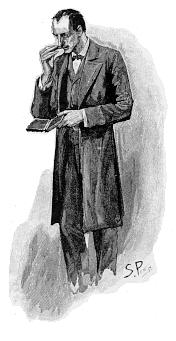
Interestingly, one of the features sometimes seen in a person at the higher end of the autism spectrum scale is a consuming and total passion for one thing. Subjects with Asperger’s are especially known for their laser-focused interests, making them a challenging fit in a culture that rewards frequent pivots to completely different activities. Psychological historians believe we can thank mild forms of autism for the achievements of Mozart, Beethoven, Charles Darwin, and Lewis Carroll. And it’s surely Aspergers that seems the dominant psychological trait of the world’s favorite sleuth, Sherlock Holmes.
Given the misplaced importance of multi-tasking across the culture, it makes sense that there is building interest in novel ideas like the self-driving car. Negotiating a ribbon of open road is a linear process that seems increasingly beyond the capacities of distracted drivers. It’s probably better to let a computer take care of a task many are less equipped to manage themselves.
If we think we have identified a significant problem here, we probably should be more humble and note that these few words on the attributes of linearity are maybe more useful in illustrating non-linear thinking. The concept deserves a book more than a blog.
It turns out that we are all poets of the dark side: we can muster an entire string of devil terms to deflate a person, without ever resorting to a dictionary or thesaurus.
We all know the childhood aphorism that “sticks and stones may break my bones but words will never hurt me.” It sells itself as a shield against verbal assaults that kids must sometimes endure. And now, it seems, we can include presidential candidates as well. But it’s so wrong. The language of personal attack can be devastating. We are selling language short if we dismiss its power to inflict psychic pain.
Perhaps a third of the ordinary language we use every day includes nouns, verbs and adjectives that can be chosen to praise or blame. I think of myself as a “scholar” and an “educator.” But perhaps to some of my students I’m a “windbag” or a “pedant.” The first two words are of the type known as”God terms,” expressions that not only name, but also judge positively. The second two are “devil terms,” renaming and judging downward. Naming upward with God terms naturally binds us together and suggests a certain amount of empathy. Though we sometimes do it for the wrong reasons, praise is often a small act of grace, as when we describe someone we work with everyday as a “smart” and a “major asset” to the organization.
But it turns out that we are all poets of the dark side: we can muster an entire string of devil terms to deflate a person or their actions without ever resorting to a dictionary or thesaurus. In recent years I’ve witnessed a grandmother thoughtlessly calling her daughter a “bad” mother for seeking a medical solution that would improve a grandchild’s hearing. We’ve also seen a presidential candidate calling a competitor “weak” and “low energy:” a news anchor calling their opposite at a competing network “savage” and “vindictive.” We are supremely equipped to throw the weight of our judgment around with the abandon of a professional wrestler.
This pattern which has always been a part of private communication has increasingly bled into our public life. A New York Times listing of public insults from Donald Trump includes a lot of language about other individuals not typically heard in the remarks of a presidential aspirant: “Hypocrite” (Bill Clinton), “dumb as a rock” (Glenn Beck), “a total embarrassment” (Jeb Bush), “totally incompetent” (Hillary Clinton), “a crude dope” (former Philadelphia Mayor Michael Nutter), “very stupid” (the current administration), and so on.1 To be sure, the wounded are often quick to respond in kind. And so, as the popular phrase goes, “our rhetoric escalates” or, more accurately, devolves.
Some individuals function so commonly in this mode that it seems apparent that this kind of rhetoric originates from some unmet needs: perhaps a defensive urge to strike first in order to ward off comments about one’s own vulnerabilities. A rapid barrage of judgments seems to represent a line in the sand, a warning of a person’s willingness to strike back. This is obviously the realm of the bully whose vulnerabilities are hidden behind the identity of a rhetorical pugilist. Not only does this political season feature some of these folks as potential political and moral leaders, but most of us have had to learn to cope with this kind verbal aggression in other parts of our lives. And then there are the genuine human horrors portrayed in film saga’s like David Mamet’s Glengarry, Glen Ross (1992) or Armando Iannucci’s In the Loop (2009). As in life, some of the characters’ taste for toxic put-downs turns out to be surprisingly moralizing, helping us learn to cherish relations that show more civility.
The hectoring and intimidation of sharp verbal rebukes is often its own reward for the impaired person who depends on them. In addition, an observation that marks another as a “fool,” or “worthless” offers a shooting gallery that can draw audiences to witness the guilty pleasures of a rhetorical take-down. In the age of the troll these diatribes are issued with the relentless frequency of machine guns emptying out their lethal contents. When writers talk about the “coarser culture” than the one their parents knew, this kind of vituperative rhetoric is often what they mean.
The problem readily suggests its own solution: It is sometimes better so say nothing than to toss out a harsh judgment about another that will hurt more than help. It’s also good to remember that such language is often seen as self-reflexive; many understand it as better describing the source rather than the target.
_____________
1Jasmine Lee and Kevin Quealy, “People, Places and Things Insulted by Donald Trump,” New York Times, January 31, 2016, Week in Review, p. 4.