At the beginning of the American Century most citizens believed that social mobility was possible if a person was bold and audacious enough to seek it.
In a professional baseball game a pitcher’s arm may only last 50 or 60 pitches. But playing the game of American life may require that we never stop. To each other we pitch for charities, business ideas, book proposals, movies, advertising campaigns and political contributions. Most of us know the rules. Make the best case you can in a compact time period you are given. And never get caught throwing curve balls.
One kind of pitch is the fundraiser. It’s perhaps a function of our times that we are flooded with invitations to attend events designed to raise money for causes that are worthy, but starved for support. A recent fundraiser at a posh country club was raising funds for a non-profit organization that provides basic housing and life skills for the developmentally disabled. Amidst the brie and smoked salmon a room of well-healed people joined an auction to bid on weekend getaways and meals at 4-star restaurants, with all of the money going to the cause. Similarly, local newspapers regularly feature heartrending attempts to crowd-source the costs of an essential medical treatment that a community member cannot otherwise receive. Only in America do we seem to miss the irony of ubiquitous pitches made by neighbors to find dollars to fund services that other advanced societies provide to all.
A friend in London notes that she mostly encounters sidewalk pitches for non-profit organizations. But the appeals are usually to benefit distant populations suffering from famine or other scourges. The goal is to make a quick plea for a worthy cause, with a follow-up request asking the listener to immediately text the money to the needy group. Another friend in Denver confirms a similar pattern, but for more local charities. She cautions that a walk up busy 16th Street at the center of downtown is done more easily if pretending to talk on a phone. That apparently keeps those who are ready to pounce at bay.
We have also institutionalized pitches. Candidates meet with potential donors mostly in private to make the case that they alone can rescue the nation. Presidential politics has now become a fully commercialized enterprise. PBS television stations have similarly turned their once-gentle requests for funds into sometimes gaudy infomercial extravaganzas. Television has even enshrined the act of making a pitch in shows like CNBC’s Shark Tank, where the proposals of budding entrepreneurs function as a kind of entertainment. We get to see how potential investors react to a “hard-sell” made by a dreamer claiming to have invented the next big thing.
The man “on the make” is an American type, enshrined in such social science classics as Daniel Boorstin’s The Americans (Vintage, 1973) and David Riesman’s The Lonely Crowd (Yale, 1961). As members of a younger and still unformed society our forbearers knew that social mobility was possible if a person was bold and audacious enough to seek it. This kind of up-by-your-bootstraps optimism marked the dominant style of early MGM films such as Babes in Arms (1939), and has been lovingly caricatured in the Coen Brother’s Hudsucker Proxy (1994). The brashness of American hype is a fantasy about ourselves that we still celebrate.
What makes a good pitch for a new product or service? Circumstances require different approaches, but as a general rule the presenter can usually rely on a few elemental guidelines.
1. Be brief and to the point. Explain the concept quickly. Then move on to the comparative advantages that make the new idea superior to competing products or services.

2. Explain the unmet need that is satisfied with the new product.

3. Put the audience in the picture. How might they or a family member use the service?

4. Sell your experience and know-how as part of the deal. It's true of investors that they want the expertise of the pitch-maker as much as they want the product or service.
No business school today could be without courses that require sales and marketing students to storm their classes with a blizzard of hypothetical opportunities too good to pass up. That is one of many possible reminders of why a cultural milestone like Arthur Miller’s Death of a Salesman (1949) remains not just a sad family saga, but a quintessential American tragedy.
President Obama signing the Affordable Care Act in 2010
The melioristic perspective is a useful indicator of how an individual has constituted the future and their role in it.
When most people use the term “rhetoric,” they usually mean it as the name for a verbal facade: an artificial construction far removed from what a person actually thinks. But a University of Chicago thinker a generation ago made a convincing case that our rhetoric tends to have its own unique “signature.” Our words, he noted, always “mark” us.
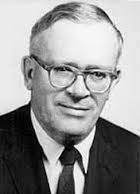
Richard Weaver
Richard Weaver never demonstrated his point more convincingly than in his observation that the sciences have a “melioristic bias.”1 His idea was that those working in the social sciences have faith in their abilities to find solutions to human problems that will make things better. That’s the essence of the bias: a conviction that human institutions tend to evolve rather than devolve. His point was that our scientific discourse reveals how much we operate on the underlying assumption that we can ameliorate social dislocations. From this perspective, a program like Social Security is an answer to the once chronic problem of old-age poverty. It’s the result of the kind of progressive lawmaking in the mid-1930s that many of us still admire.
Here’s the interesting thing about the melioristic bias. Operating on the assumption of the transformative power of institutions is what gives political progressivism its energy. Challenging social conditions are seen as opportunities for fixes, reforms and new policies that can further the cause of social justice. This belief is the core catechism of American liberalism.
Weaver became an important figure in the evolution of conservative thought in the 1960s. It seems clear from his work that he viewed the “true” political conservative as someone who is more willing to accept certain human tendencies as givens and less amenable to bureaucratic fixes. In simple terms, societies are not going to be significantly transformed for the better simply by using the rhetoric and machinery of social change, which ask for more than it is in the nature of institutions to deliver.
This belief in the need to recognize certain “essences” of human nature was central to Weaver’s view. From his perspective the rhetoric of change and the realities of change are two different things. We may idealize a solution—increased access to medical care in the Affordable Care Act, for example—but the actual organizational response to a given social issue is always going to be problematic. A conservative usually can’t imagine so complex a piece of organizational planning as likely to be effective.
This skeptical stance is representative of a baseline view that puts greater faith in individual human agency rather than bureaucratic power, a difference that explains the “government-is- the-problem-not-the solution” logic that thrived in the Reagan years and survives in the current Republican Congress. Somehow massive corporations are mostly seen as immune to the same problems.
Of course this simplified view of the world overlooks how individuals can be dispersed along the continuum that separates these polar opposites. Nonetheless, it remains a useful kind of insight to look for the melioristic perspective as a sign of how an individual has constituted the future and their role in it. See the world as a place of eminently doable reforms–still my view, even though its picked up some dings over the years–and you have a reasonable indicator of a political liberal. In contrast, identify someone who sees progress largely through individual rather than organizational initiatives, and you have probably discovered a classical conservative. Either way, the bias is easily discovered when a person’s rhetoric drifts toward consequential topics.
1Richard Weaver, The Ethics of Rhetoric (Chicago: Gateway, 1953), 194-200.