It is a skill with almost no upward limit for improvement. Regular effort helps, but few of us ever fully master the challenges of communicating our thoughts.
Hundreds of blog/essays and eight books have consumed most of my adult life. But to be frank, re-reading any piece is bound to produce a few cringes. In hindsight there always seem to be better wording choices than the ones I chose. I never quite achieve the verbal economy and mastery of images like essayist Roger Rosenblatt, now retired in his 80s and, in this sample, celebrating his grandchildren:
Now I have the time and freedom to putter around in their lives, asking this or that, making private jokes. The kids seem to take my attention gladly, or are too polite to tell me they don’t. Either way I have a flourishing garden of young people with whom I can banter to my heart’s content. So I do.
Writing perfection is an elusive goal. It is a form of human invention and at the same time, a test of a writer’s stamina and creativity. Writing for some practical need, such as a report, is rarely much fun. But an author who gets to exercise their muscles in behalf of the pleasures of personal expression may have good reasons to persevere.

Few imagine getting any pleasure out of such a solitary activity. Writing requires concentration and mental gymnastics, which is perhaps why so many welcome the chance to give the task to A.I. Why bother with authorship if some of those programs can turn out a passable paragraph?
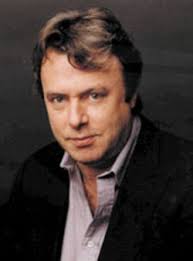
Here’s why: there is satisfaction in putting your name on a visible piece of your consciousness. Songwriters and artists understand the personal value of making something using your own thoughts. You should want to write in character: not borrowing someone else’s consciousness, but using your own. Think of Bruce Springsteen agonizing for days over song lyrics in the recent film, Deliver Me from Nowhere (2025). The whole film is about his process of rhetorical invention. In my case, explorations of the subject of human communication are endlessly fascinating: like a labyrinth of caves within a giant limestone formation. Writing is an act of discovery. It is a natural complement to reading, which is why we keep returning to people like Jane Austen, Joan Didion, or Christopher Hitchens.
To be clear, I’m not talking about writing narrative fiction. I’m focused here on non-fiction writing of personal thoughts or arguments. Any essay or survey of your own judgments or feelings should be interesting. If you make the effort, you might discover that you have a flair for revealing verbal imagery that opens up new perspectives or insights.
Constructing written material involves a life-long learning curve. Even so, here are a few suggestions here may be useful.
⇒ When faced with the challenge of putting more than a few thoughts together, pick the time of day when you are on your game. Writing is a high-order skill. It requires your total engagement and a minimum of distraction. I write in the morning and rewrite in the afternoon. Some flip this process and find the energy and creativity to write late at night. The point is to identify your sweet spot for being able to concentrate, giving yourself over completely to the task. Forget multitasking or a tv blasting in the background. Writing needs full and unbroken concentration.
⇒ When staring at a blank page or screen, the goal is to start. Don’t let that blank space remain untouched for long. What your write first may end up at the end of the piece or be discarded. That’s fine, but start. First thoughts kickstart the whole process of discovering what you think or know.
⇒ Edit later, but edit. All of us can benefit from good outside editors. But even when that is not an option, think like an editor, but after you’ve exhausted your creative efforts. Work first to generate ideas that you may want to amplify or develop. You will be a smarter reader of your own work after you have committed most of your ideas to the page. The amazing thing is how the generative process of writing is triggered by more writing. On some occasions you may find that this domino effect starts to take over. You think you are ready to stop, but your brain still is pouring out ideas that need to be captured. That’s a good sign you are getting into a productive groove. It is also a reminder to avoid overreliance on a prior outline, which can turn into a straitjacket that can cut off more spontaneous thinking.
 ⇒ Tame your word-processor. Don’t turn on so many features that it starts to take over the process that you should control. Sometimes auto-correct is way behind what you may have in mind. Ditto for artificial intelligence, which is the cobbling together thoughts from other people’s writing. More basically, A.I. will not be in your unique style. It’s a fake for what should be an extension of you and your feelings.
⇒ When editing, an online editor can help pick up obvious mistakes of spelling and grammar. An even more useful computer tool is the “read aloud” function in Word and other programs. I usually read by skimming. So my own fast read-through can miss what the read aloud function can reveal. We can be amazed at how well this tool reveals bad word choices, repetitious words (a common problem for me), and other forms of nonsense.
⇒Keep Reading. Most of our writing naturally improves as we absorb the work of accomplished and recognized writers. Absorb the work of people who can hold a reader’s attention. Sometimes a good model is a piece of critical analysis you admire.
⇒ If you are making controversial or technical conclusions, do your reputation and your readers a favor by citing the sources used to support them.

⇒ Expect to do rewrites. As author Anne Lamott has noted “shitty first drafts” are the rule. What you wrote first may not be what you actually want to say. Paragraphs will probably need to be re-ordered. Overlapping ideas can be condensed. And clarifying early previews can be added or moved. (Sometimes the true point of an essay finally comes at the end: not an ideal place for your reader.) In short, give yourself time to polish your ideas.
Finally, writing offers a pleasant bonus to diligent scribes. If a first draft is crummy, the third or fourth may suddenly pick up speed and read like lightning. Hollywood mogul Jack Warner was hilarious but wrong; writers are so much more than “smucks with Underwoods.”