It’s an ironclad rule of rhetoric that we often seek personal redemption through the act of victimizing another.
The master critic Kenneth Burke was a great observer of our communication routines, and never more so than when he described the “scapegoat principle.” For most of us working to understand why we say the things we do, this familiar rhetorical form is a frequent reminder of the psychological benefits of transferring guilt to others.
Burke noted that groups or individuals face two options when a decision or action didn’t turn out as well as they wished. If we screwed up, we can accept responsibility and note with regret that our efforts failed to work out. He called this the “mortification” option, as in “I thought I could fix the bad feeling between Bill and Fred, but I think I just made it worse. I’m not very good at playing the role of mediator.” But doing this, of course, carries no obvious rewards, and requires a certain degree of grace and humility.
So we usually opt for the second choice: we scapegoat the problem to others. It’s easier to blame Bill or Fred because doing so is an act of personal redemption. In this form our words are all too familiar: “Things are not going very well in my life right now and it’s her fault.” Like a fast-acting pill, the shifting of unwanted effects to others lifts us from the burdens of self-examination. In Burke’s language, we have “cast out” the problem. Perhaps this is why we have parents, pets, uncles, Republicans, socialists, college professors, Iranians, labor unions, members of Congress and in-laws. We can feel better when we believe that others are worse.
Most forms of scapegoating have a familiar ring:
“They have created the mess we’re in.”
“My life is not going well; I blame the President.”
“True, I flunked the course. But I had a lousy teacher.”
“We’d be a good organization if only we had different leadership.”
“The problem with America is that it has too many illegal immigrants.”
Or, my favorite: if I am teaching a class and I’ve run on too long about some pet idea: I’ll pick one of any one of the thoughtful members of the course and blame them for making us fall behind. By now my students are used to the joke.
Tribes have always used sacrifices to purge the group of its problems. The usual victim was a four-legged animal that would be sacrificed to cleanse away problems usually caused by other humans. In the 21st Century we are less likely to round up a hapless critter for this ritual “casting out” of guilt. Instead, we usually pick a plausible member of our own species and simply attribute our problems to them. Think of internet trolls and their venom. Anonymous comments online represent a perpetual Lourdes of guilt transference.
It would be nice if we could chalk up this human habit as but a small foible in the species. But the consequences of blaming others can’t be so easily dismissed. It’s worth remembering that Hitler’s murderous purge of supposed “non-Aryans” from German society—first with words and later with death camps–was fresh in Burke’s mind when he summarized the scapegoating principle.
The romantic in me wants to believe that a person filled with the poison of division might learn from seeing other human beings literally acting in concert.
Never mind that some of the people we encounter have rough edges. It’s the murderers and vengeance-seekers we need to fear, like those who sow justifiable terror in the citizens of Turkey, Syria, Afghanistan, and a host of other states that are struggling to again become civil societies. News of terrorist mayhem in the Middle East and elsewhere feeds the obvious conclusion that human misery often flows from tribal tensions. But our knowledge in a 24/7 satellite-saturated world hasn’t really helped us understand the cultural origins of long-held animosities. We see effects more than their causes. Even so, with enough optimism it is possible to imagine how we might begin to tame regional hatreds that feed the impulse in some to fight to the death.
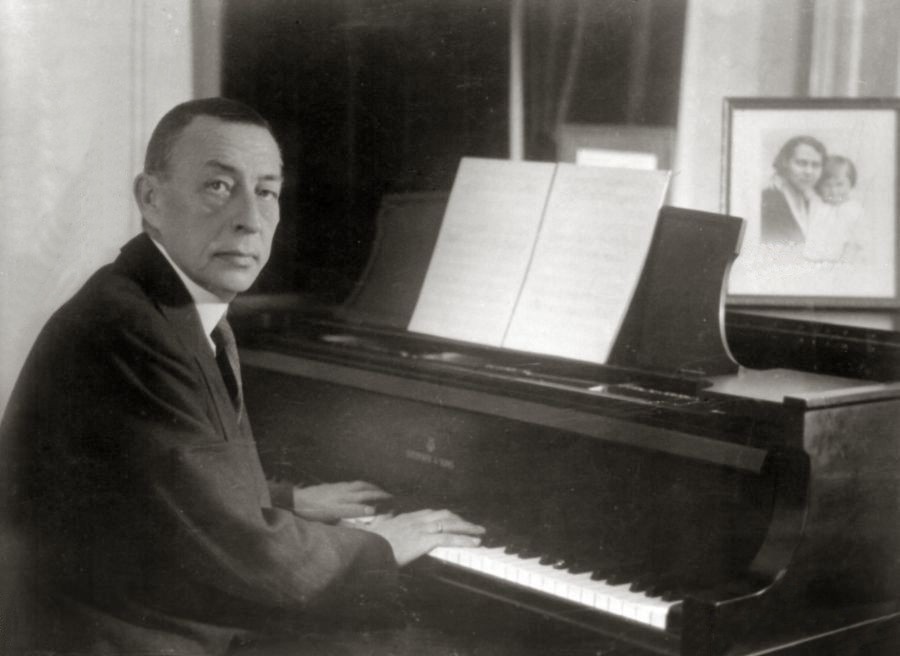
Call me naive, but I wish every actual or future ISIS executioner would volunteer to spend an evening listening to an orchestra of diverse members perform something like Sergei Rachmaninoff’s Second Symphony. I’d especially wait in anticipation to see if their hatred might begin to melt under the warmth of the Third Movement. The romantic in me wants to believe that a person filled with the poison of division might learn from other human beings literally acting in concert to produce something transformative. You know this Adagio of the Symphony, where the melody is passed from the violins to a clarinet, back to the French horns, and eventually back to the strings. It’s probably the most breathtaking theme this melodic Russian master ever wrote.
This version by the Radio Philharmonic of Amsterdam is followed by comments on U-tube such as “beautiful,” “sublime,” “transfixing,” “magnificent,” and “incredibly emotional:” these, in a space usually owned by trolls.
Is it possible to find transcendence in a lyrical phrase? Can music soften anger and the kind of fixed rage that feeds the impulse to destroy? Could it be that we are looking for peacemakers in all the wrong places?
The idea of using music as an arena of shared experience is partly behind the efforts of Daniel Barenboim and the late Edward Said, who in 1999 founded the West-Eastern Divan Orchestra. The group is made up of Israeli, Palestinian and other Arab musicians. When war broke out in Gaza in 2009 Barenboim noted to audiences on both sides of the Palestine/Israel divide, “We aspire to total freedom and equality between Israelis and Palestinians, and it is on this basis that we come together to play music.”
The same impulse to return us to our shared humanity occurred In 1989, when Leonard Bernstein celebrated the end of a divided Berlin by performing Beethoven’s 9th Symphony at the wall with an international orchestra of musicians and singers. He noted that “we have not yet found ways, short of murder, to act out our suppressed rages, hostilities, xenophobias, provincialisms, mistrust and need for superiority. We still need some kind of lower class as slaves, prisoners, enemies, scapegoats.” The concluding section of the symphony is its triumphal “Ode to Joy,” which can be easily understood as an affirmation of the new freedoms possible in a country made whole again. Americans probably also heard a victory anthem at the rapid demise of a repressive Soviet Republic. But Bernstein meant that Beethoven’s music should mean more, noting that “somehow it must be possible to learn from his music by hearing it. No, not hearing it, but listening to it, with all our power of attention and concentration. Then, perhaps, we can grow into something worthy of being called the human race.”1
___________________
1Bernstein quoted in Greg Mitchell, “When Bernstein and Beethoven Celebrated the Fall of the Berlin Wall,” The Nation, June 1, 2013.