The coverage of the entire episode points to how feeble our political life has become.
Journalists and some Americans expressed amazement at the impromptu debate that broke out in the Oval Office on December 11. The President was meeting with Nancy Pelosi and Chuck Schumer in the hope of coming to an agreement to keep the government funded into the new year. To the surprise of the Democratic leaders, Trump opened up the meeting to the press, who then scurried into the crowded space to record the conversation taking place inches away. For the next 17 minutes a sometimes rancorous discussion unfolded, especially after Trump indicated he would prefer to shut down the government than accept a bill without financing for the five-billion dollar folly of a border wall.
Pelosi and Schumer were not pleased. For them, “debate” usually means reading prepared remarks to empty chambers. They expected a private discussion rather than an event that gave the impression that they had been sandbagged. Trump professed his pleasure for the open meeting, noting with a half smile that it was an example of “transparency.” And so the bickering continued, with both democrats claiming there was very little legislative support for his project.
The President and former reality television star seemed to love the moment. But in truth he’s not a very good debater; in this instance he gave up too much to his opponents. Using his preferred style of bluster, he overreached by taking full responsibility for any eventual government shutdown. He said it would be worth the price of improved American security.
Aside from this bogus false choice, Trump clearly had forgotten what misery that closed government facilities can cause in a holiday season when the need for them is near its peak. Want to visit a national monument? Think again. Want to get information on medical and social security services? Not if the government is mostly closed.
The coverage of the entire episode points to how feeble our political life has become. We welcome the shelter of like-minded folks on the news channels that many of us watch. In these polarizing days even our choice of who to spend time with is weighed based on the known political views of the others. Moreover, as a nation we are less likely to entertain a full debate on the merits of an idea unless a member of the press is present to change the topic when things begin to get interesting.
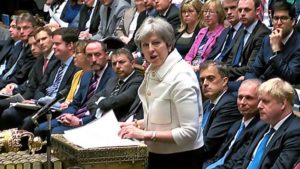
At the same time that there was this momentary public airing of differences, British legislators were still engaged in a nearly continuous public debate–much of it within the House of Commons–exchanging pleas to move beyond the self-inflicted morass of Brexit. To be sure, it is a mess; few are interested in throwing Prime Minister Theresa May a lifeline. However this quandary is resolved, it is likely to cost Britain a great deal in terms of its national prestige and economy.
But here’s the point: though we may be justified in giving our British cousins a rap on the head for this quagmire, give the country credit for airing the issues fully, and with the expectation that the Prime Minister will participate in days and and many hours of open debate with her opponents. Britain and other parliamentary democracies have woven debate into their system. True to form, May has been a dutiful if uninspired advocate throughout this exhaustive process.
The British expect that a public official should be able to answer questions about key facts, the likely effects of policy actions, and best estimates of the consequences of a changed relationship with the European Union. Public debate is a fixed expectation. In the United States it is such an unexpected event that it gets its own “Breaking News!” graphic and an excited cadre of talking heads. All of this in an age where we have convinced ourselves that we are more connected than ever.