Category Archives: Problem Practices

Communication behavior or analysis that is often counter-productive

The Acoustic Sponge of White Noise

While some sources of ambient noise can’t be stopped, communicators seeking the ideal environment will do what they can to minimize it.
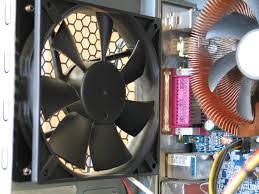
Photo: Wikipedia
Photo: Wikipedia

Sound produced by a person is as fragile as a feather.  As a slight disturbance of air pressure it exists only in the moment, decaying almost instantly.  And at normal levels it is often no match for the environmental noise we accept as the price of living in hives of activity.  Humans produce sound as speech over a frequency range of roughly 100 to 5000 cycles per second.  That’s a fairly narrow range in comparison to what the ear is capable of sensing.  Moreover, the relative volume of our speech is modest. We need to be in a small room and in good voice to generate sufficient loudness to be easily heard, somewhere in the neighborhood of perhaps 60 decibels (db).  But this measure of sound pressure increases logarithmically, so that continuous exposure to noise above 95db is sufficiently risky to be recognized as a workplace problem by OSHA.

Our ability to be the primary source of another’s attention is easily swamped   by a passing ambulance with its siren on (about 110 db), the shrieks of a child on a bus or a railway coach (95 db), or even the nearly constant drone of background music or others talking in the same general area (perhaps 40 db).

Most of the background sound in our lives is this kind of noise. Unless we are in the unlikely space of a anechoic chamber that is built to exclude all external noise (and where the only sound heard would be our own heart pumping),  we pass our days in a constant circus of external noise.  We are often not conscious of it.  Indeed, our brain is pretty good at tuning it out.  Awake from a deep sleep, and you can actually hear the ambient noise of a room quickly being “turned on” by the brain.

But here’s the challenge.  We use our voices to do a lot of important work.  We need to be heard often and clearly. Sometimes our livelihood depends on it (as in teaching, face to face sales, conducting meetings and interviews, and so on.  At other times the din of constant noise destroys the chances for making an impression, or for a family to function as a family. The requirement to compete with other “convenience” devices in our lives—dishwashers, televisions, air conditioning, another’s constant chatter—can leave us exhausted.  Nothing is more fragile than the attention of another person.

The most common source of this fatigue is “white noise:” a collection of many sounds thrown together in the environment.  Because it contains many different frequencies, white noise is a sponge soaking up whatever else is existing in the same space.  And because it does not necessarily seem loud to us, we overlook the fact that it is blocking our ability to connect with others.  Here’s a sample with its video counterpart:

The ambient sounds in your life will often be more subtle, but still disruptive of the ability to easily dominate another’s attention.  The major culprits: air handling systems in buildings, others talking at the same time, transportation traffic on the ground or in the air, even wind filtering around buildings and other natural objects.

While some sources of this ambient noise can’t be stopped, a savvy communicator seeking the ideal environment for reaching others will do what they can to minimize it.  Shutting doors and windows can help. Turning off air conditioners is sometimes possible (and a common decision in location filming when the sound crew realizes the problem).  It also makes sense to ask others in the same space to carry their conversations outside.

We use public address systems to increase the loudness of a voice.  But the better solution with a smaller group is to seek out a small room, or at least to arrange seating so that each person is just a few feet from others in the group.  Part of being successful as a communicator thus means also being at least an amateur acoustician.  As a person who lives by presenting ideas orally, I always check out the space in advance, doing what I can to make it easier to be heard.  A few months ago that meant asking a group to stand by while I ran out of the building to wave off two gardeners with noisy leaf blowers strapped to their backs.  Gas-powered motors are monster sponges that can sabotage anyone’s best efforts.
 

cropped-Perfect-Response-logo.jpg

Prayer as Performance

Photo: New York Times
                          Photo: New York Times

Prayers within a place of worship seem right, but even some clergy think it’s a bad fit when prayers are imposed on others beyond a given faith community.

The Supreme Court’s recent 5 to 4 decision allowing the town of Greece New York to open its meetings with a prayer (Greece v. Galloway, 2014) was a blow to groups like Americans United for Separation of Church and State. Barry Lynn’s organization was among the petitioners arguing that it was a violation of the Establishment Clause of the First Amendment to allow municipal groups to begin meetings with a spoken prayer. The clause states that a governmental body cannot establish or impose religious beliefs on others. Most of the discussion surrounding this judgment has focused on when a religious act in a civic space passes the threshold of being more than simply “ceremonial.”

The idea of officially sanctioned prayers in secular spaces poses a reasonable question. Why is a spoken public prayer necessary at all?  Wouldn’t a moment of silence do the same thing, with the benefit of not of leaving some citizens with the impression that they have been excluded?  In the United States it is common in many communities for a town or community to invite members of the Christian clergy to perform these functions, even though attendees at meetings often include non-Christians and non-believers. Of the two plaintiffs in Galloway, one was Jewish and the second was an atheist. They objected to the fact that most prayers in the upstate New York community invoked God and Jesus.

The Bible’s Matthew 6:6 advises the devout to enter into a private place for prayer.  “When thou prayest, enter into thy closet, and when thou hast shut thy door, pray to thy Father which is in secret. . .”  We also know from other Gospels that Jesus often left his followers to pray alone. He seemed to have no appetite for turning prayer into a rhetorical exercise.

 If prayer is what most of us assume it to be–a conversation between oneself and God–it by default beyond the notice or sanction of the state. We are truly free to pray almost anywhere at any time.  But insisting on public prayers spoken in behalf of a group often seems to represent an ersatz kind of religiosity that uses piety to conceal a less noble rhetorical function. Because they are meant to be seen, spoken prayers demand at least the outward compliance of all who are present. By essentially demanding visible supplication to the speaker’s God there is also an implied request for at least tacit endorsement.  Only a bore would interrupt another’s fervent prayer.

There seems to be an additional function of prayers offered in schools,  or at the beginning of town meetings in places like Greece New York, or just before opposing teams beat each other up on the playing field.  Some of these efforts seem to be back-door attempts at what a sociologist might call “social legitimation.” Those who insist on a ritual of public prayer are also insisting to be noticed.  And one reasonable guess is that they are using the specific language of their faith to impose their own aspirational values on the larger community.

As things go, this kind of inducement to compliance is no more than a mild form of coercion. But using the good will of others to achieve a private objective is not a pretty sight, especially when the process is ostensibly democratic.  The idea of personal freedom is degraded when we are forced into arbitrary forms of  compliance.  It’s one thing if a self-selected group wishes to invoke prayers heard by all members. But that is not the case with those who gather to further civic causes. Communities are often diverse.  And most civic groups are organized around instrumental rather than inspirational goals. So when authorized by cities and other secular establishments, public prayers seem to function as a kind of theater of status endorsements: rewarding the compliant and reminding those beyond the pale that they are a minority.