Michelle Obama responding to the kidnapping of Nigerian girls in 2014 wikipedia.org
Nearly all Americans can be provoked into political engagement if they suspect their identity interests are threatened by governmental bodies.
These days our public rhetoric includes a lot of angst about slights and insensitivities to individual communities under the big tent of American life. On one hand, many Americans believe other members in the society have become too sensitive to language that only seems to demean or degrade others. The view from this mostly conservative side of the ideological divide sees “political correctness” as “liberal” overreach that verges into censorship. They argue that the once-worthwhile idea of inclusiveness has run amok.
Other communities see these problems as all too real, noting that it’s wrong for outsiders to appropriate another group’s cherished symbols, as when a sports team calls themselves the Redskins. Most social progressives argue that it’s equally a mistake to mislabel or ignore others if the effect is to place a community on the margins of American life, as we’ve seen in recent complaints that Academy Award nominations feature too few Hollywood professionals of color.
Sometimes the offenses committed against groups are blatant and criminal, demanding a response. Police shootings of unarmed suspects and the treatment of women in parts of Africa and elsewhere only hint at what is a long list of justifiable grievances. More subtle are complaints of how affinity groups are named in the media, along with concerns about who gets to tell their stories. Black Lives Matter, Occupy Wall street, native American groups, veterans organizations and countless others are tuned to pick up linguistic slights they see as representing deeper animosities. Were the occupiers of Oregon’s Malheur National Wildlife Refuge “felons,” or freedom-loving “militiamen?” What does it mean at Princeton that the name of Woodrow Wilson is attached to one of it’s prestigious schools? Should the former president be known primarily as a “political progressive” or a “racist?” And there is even one American college that is embroiled in a mini-controversy over whether their food court should be permitted to serve “General Tao’s Chicken.” Is the kitchen’s botched attempt to serve a dish with apparent Chinese roots a case of “cultural misappropriation?”
As these questions swirl through the culture it seems that our collective nerve endings have become raw. Americans seem to hear slights from their neighbors rather than empathy. More than a few observers of our national scene wonder if the middle will hold, whether the United States is still sufficiently united to be a functioning culture, let alone a “great society.”
There are no simple answers. Especially on this subject, individual perceptions matter. The charges of “inquistic colonization” or offensive omission are the prerogatives of any wounded party to at least express.
From a communication perspective it is important to note that we are all affected by status issues: those topics in a culture that provoke ordinary citizens to ask if their interests are adequately acknowledge and protected. Politicians sometimes call these hot topics—abortion rights, equal access to good schools and a decent job, respect for religious beliefs, respect for gender differences—the “third rails” of American politics. In a subway the third rail is the train’s power source, carrying upwards of 1500 volts that can instantly fry any human that touches it.
Status issues arise and dominate our public discourse when enough Americans believe their cultural legitimacy is being put at risk by the hostile actions of a political institution.
I find it helpful to remember that a secure place under the umbrella of a state is part of any citizen’s birthright. We expect to have our legitimate interests respected if not honored by others. It is sometimes easier to accept claims of marginalization if we understand this fact. Here’s the point: fears expressed in a rhetoric of anger may lead us to overlook the simple need of every citizen and their tribes to feel acknowledged.
This is the realm of the problem-solver, the creator, the owner of a consciousness that will discover and understand what a fragmented thinker may never find.
By definition, a distraction is a detour. It happens when the continuity of some effort is broken by the need to shift attention elsewhere. Since this website is dedicated to communicating in “the age of distraction”—be it advertising clutter, too many texts and e-mails, or the frenetic pace of overscheduled lives—we should have an interest in persons who resist all the cultural noise.
One answer to this problem is to discipline ourselves to follow a more linear pathway, even though cultivating this kind of thinking cuts against the grain of the culture. And it’s not easy to tell the world to take a hike while we muse alone in our own self-made bubble.
Linear thinkers take many forms: avid readers content to devote large chunks of time to a single work of fiction or non-fiction, artists happily left alone to work through decisions that will end up on canvass or as musical notation. And of course we’ve enshrined the image of the “mad scientist” as a loner following the threads of their research with long hours in the lab, leaving family and friends to fend on their own.
George Frederick Handel wrote the great oratorio Messiah in spurt of nearly unbroken concentration, finishing in just over three weeks. And imagine the sustained effort required by William Lamb’s architectural firm, who designed and prepared drawings for New York City’s Empire State Building in an incredibly short two weeks. The iconic skyscraper was completed in just over a year. Such dedication to a single task can be scaled down to what many writers sense when they notice the time that vanishes when they are absorbed in their work.
The linear thinker looks forward to clearing the decks sufficiently to be able to see an unobstructed view of the horizon. Undisturbed concentration gives them power. This is the realm of the problem-solver, the creator, the owner of a consciousness that will discover and understand what a fragmented thinker may never find. Unbroken attention to a task allows a first effort to build on the synergies that begin when scattered thinking begins to see connections and consequences that others may miss.
This is more or less the reverse of the kind of segmentation of effort that is now embedded in our work and so much of our media. A reader’s time on a single web page is usually under a minute. And we are getting cues from all over that we’re not noticing our preference for hyper-compression. Consider, for example, the New York Times reporter who recently noted in passing that an individual “argued” a point “on Twitter.” Really? Can a person “argue” in the traditional sense of the term—which includes asserting a claim and it’s good reasons—in a verbal closet of 140 characters? Twitter imposes absurd limitations on the expression of thoughts, matched by political ads that “argue” public policy in 30-seconds, television news “sound bites” from policy-makers that average around eight seconds, and the de-facto editing style of commercial television that cuts individual shots into lengths of two or three seconds.
We now think of a Ted Talk with a maximum running length of 18 minutes as an “in depth” discursive form. No wonder some of my students think of a 70-minute lecture or a 40- page chapter as the functional equivalent of a long slog across a vast desert.
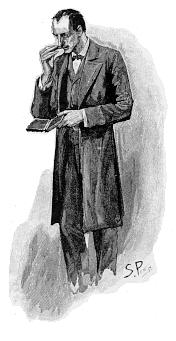
Interestingly, one of the features sometimes seen in a person at the higher end of the autism spectrum scale is a consuming and total passion for one thing. Subjects with Asperger’s are especially known for their laser-focused interests, making them a challenging fit in a culture that rewards frequent pivots to completely different activities. Psychological historians believe we can thank mild forms of autism for the achievements of Mozart, Beethoven, Charles Darwin, and Lewis Carroll. And it’s surely Aspergers that seems the dominant psychological trait of the world’s favorite sleuth, Sherlock Holmes.
Given the misplaced importance of multi-tasking across the culture, it makes sense that there is building interest in novel ideas like the self-driving car. Negotiating a ribbon of open road is a linear process that seems increasingly beyond the capacities of distracted drivers. It’s probably better to let a computer take care of a task many are less equipped to manage themselves.
If we think we have identified a significant problem here, we probably should be more humble and note that these few words on the attributes of linearity are maybe more useful in illustrating non-linear thinking. The concept deserves a book more than a blog.