Tag Archives: The Sonic Imperative

Degrading the Youthful Birthright of Music


Has Music Become a Second-Tier Backup?

The popular music YouTuber Rick Beato recently posted a short piece asserting that kids—including his own—have devalued music in their lives by tying its delivery to their smartphones. In his 60s and completely sound-centric, Beato remembers his own youth when collecting and listening to music was a prized means of expressing their own identity. As I noted in the last post, recordings, record stores and radio airplay meant a lot. But his point that 4G and 5G technology as applied to smartphones has changed a lot. I would add that the phone screen partly changed the ratio of our dominant senses by giving communication in general a more visual and less auditory focus.

Sight now dominates over sound in almost all media forms: games, chats, texting, and social media content. To be sure, music is surely still within this mix. Headphones have become standard personal gear for many, in spite of the unfortunate “I’m not in this space” vibe that wearing them passes on to others nearby. But Beato is probably right to assert that contemporary pop music has receded in importance, used as an aural background for other activities. It is less surprising that even the younger among us might not recognize many of the performers on Billboard’s “Hot 100.”

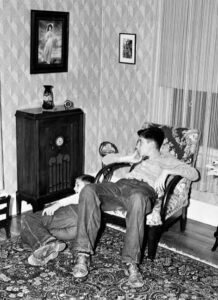
There is also a strange but revealing anomaly that used to be common. These days, no one now sits around and watches a record play. I mean that literally. The mid-century habit was once common among the young where attention was paid on what was being heard. We weren’t exactly in a trance but our visual sense was put on hold in order to focus on the music spinning out of the grooves. As was also true in the heyday of radio, complete listening could put the need to see something on pause.  We have all had the experience of hearing something so intently that our eyes drift into an inactive state.
In terms of my own previous work in The Sonic Imperative (available to download on this site), we are now much less “sound-centric.” And I’ve heard it scores of times: a student struggling with an academic subject complaining that he or she is a “visual thinker.” Learning or entertaining oneself by hearing might seem to have had its day. But it has not.  For reasons explained in the book, the processing of sound still remains our first sense. 

Social Media Dominates 

teens and cell phones

17-year-olds average almost 6 hours a day on social media. While some of that time is allocated to “listening” to music, researchers note that this is background for other activities such as homework, gameplaying or work. In this framework, the music video born in the 1980s was an adaptation and a form of self-defense. The hooks to these videos were often the images added to remain competitive as music television expanded. Even so, it was hard to fault musicians who resisted turning their audio art into a clutter of visual memes.

Add up what is now the default youthful focus on watching short-form videos, and we would get a pretty low index of our sensory experiences. All of the accumulated visual editing yields very little that matters; not the experience of those lucky enough to still be caught by the raptures of music.


 

two color line

Listening to the Wood

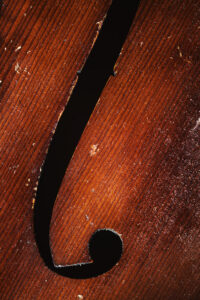
Resonators made of wood enhance overtones in many instruments, offering big auditory rewards.

In our distracted lives we get fewer chances to let any single source of human innovation saturate our senses. To be sure, opera fans, Marvel movie addicts and book readers may stay with a single source for an extended period of time. The rest of us are usually on to several other things in short order, allowing music to turn into sonic wallpaper that fades into the background.

But more recently, and with the time made possible by COVID isolation, perhaps more of us have taken the time to notice that the right music reproduced on the right sound system can offer new rewards. It can be a thrill to hear what was never noticed before.  And what we frequently hear if we listen with care are the amazing sounds of wood resonators that exist in most acoustic instruments. As a start, think of oboes, violins, violas, basses, harps, pianos, acoustic guitars and cellos.

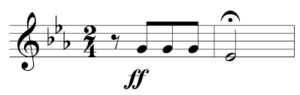
There’s no doubt that It is easy to get lost in the weeds when describing how music yields pleasure. We are still offered a range of explanations about what those are. What can be said about a kind of “language” that is all expressive and mostly non-stipulative?  It’s anybody’s guess what Beethoven was “saying” in the first four notes of his iconic Fifth Symphony. What it represents is mostly in us.

That is equally true for the mental associations that surface from any single musical phrase.  But the wood of an instrument provides some useful hints. What seems clear over a lifetime of listening is that part of the joy of music lies in the ever-unfolding timbres of the singers and instruments themselves: specifically the aural colors heard in the fundamentals and overtones of that emerge from acoustic sources. The overtones that double and triple the frequency of a fundamental are subordinate in volume, but add to the richness of sound is shaped by the instrument itself.  Timbre is frequently what we describing when we say will “like the sound” of a particular instrument. This quality explains why two different instruments playing the same note can sound so different.  The note C2 played on a synthesizer can be pretty uninteresting. Add in the playing of the open C2 string played on a cello, and suddenly the instrument fills our ears with multiples of that fundamental, often making the wood itself strangely visible to the ear. The wood amplifies and resonates at complementary frequencies.


Sound From Organic Sources

It’s no coincidence that the bone in the skull is also a resonator with some of the density and rigidity of wood. It’s a big part of what makes up a singer’s voice. These natural materials put to work in the service of music creates a kind of synesthesia, where we “see” the sound within the materials set in motion by a musician. Perhaps we should consider mahogany, spruce, willow, maple and rosewood as our organic twins: trees outside that match the flexing tree that resonates within us.

Again, the cello is a good as an example. Pluck a string on an unamplified guitar and you get. . .well. . . not much:  a thin, flat sound. But strings tied to the resonator of a cello come alive, sounding frequencies in the neighborhood of the human voice, and capable of adding richness when doubled with the music someone is singing.  Aurally, we hear this pairing of the two kindred sources that can blossom into expressiveness.  It’s little surprise that audio engineers and musicians sometimes describe what they hear as a “bloom” of sound that has been enhanced by resonances from wooden instruments and sometimes buildings.

A good example is a Roger’s and Hammerstein’s ballad from Carousel (1945).  A YouTube clip featuring the John Wilson Orchestra at a BBC Proms concert. “If I Loved You” seems nearly perfect as musical conversation between singers Sierra Boggess and Julian Ovenden. Boggess’ crystalline voice first carries the words of this curious un-love song mostly by herself, with the orchestra quietly backfilling.  But at 3:50 Ovenden takes his turn, and the orchestra starts to double his singing, matching his version of the theme note for note. And the effect is stunning. Doubling instruments with a voice exists in virtually every musical form, usually adding musical weight and power. And the cello is a special case, because it duplicates the range of a male voice. The resulting synchronicity drives home the peculiar pathos within the song.

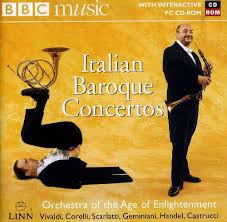
All  of this is worth mentioning because so much contemporary music has been stripped of its birthright of natural resonance.  Harmonics and overtones are easily swamped by synthesizers, amplifiers and audio processing that takes the sound of wood out of a recording. As I note in The Sonic Imperative (2021), the electric guitar and the use of audio effects introduced by Les Paul and others in the early 1950s dealt a blow to the acoustic origins of music. I still like the sounds of Les Paul and Mary Ford.  But their constructed sonics also make me want to go back to performances where air and wood are the auditory attractions, as in a modern BBC/Linn recording of Italian Baroque concertos.  In that performance 17th century wood instruments fill the room with a glow of natural resonance.