
We are good at putting on July 4th parades, but less convincing as a national community of engaged citizens.
We sometimes talk about nations as if they are comparable. National rankings of happiness, educational attainment, crime, poverty, and much more convert a nation’s census data into per-capita breakdowns that seemingly offer level schemes for cross-national comparisons. But I have my doubts that it is that easy to arrive at meaningful differences between, say, Norway or the United Kingdom and the United States. Social programs vary, which may mean it is better to be poor in Scandinavia. Also, the U.S. includes the length of an entire continent with a population of nearly 345 million, and immense regional variations in wealth, income level, child care standards and educational systems. True, many of us are proud of a multicultural U.S. : a feature that other nations with monocultures might see as a problem. Farmington New Mexico is over two thousand miles and a world away from Farmington New Hampshire. Which town can stand as representative of the nation as a whole? The European equivalent would be a comparison of Munich in Bavaria with Naples in the south of Italy. Wealthy Bavaria’s poverty rate hovers just above 11 percent; Naples is closer to 26 percent. Yet these EU regions are only 740 miles apart, roughly the equivalent of the distance from Chicago to Dallas. To be sure, distance as a basis of national comparisons matters less than it used to, but the enormity of American sprawl explains wider demographic variations in critical measurements that can be converted into national averages. But the idea of a single nation is a bit of a fiction.1 Those same variations also play into the continuous pull of regional identifications that tend to undermine support for national unity.

Would America’s founders have wanted half of the nation to be mostly shut out of its governance by a reactive president and his dithering majorities in Congress?
When I was a visiting professor in the 1970s my British colleagues and I might end the day in a pub, where the conversation could easily turn to any number of American failures. Riots, urban poverty and high homicide rates might be cited in queries about “what was wrong with the country.” After the requisite sigh expressed by most American expats facing the same question, I recall responding on one occasion by asking if they could account for what were then the high crime rates of southern Europe, which was part of their Economic Community. Obviously, no one felt the urge to defend the mafia in southern Italy, though we agreed that we still loved the people and nation. Scale matters when trying to validate national labels. More disturbing for U.K. residents is the growing gap in personal wealth around London compared with what is often cited as Mississippi-levels of poverty existing in parts further north. Should social and economic conditions in a nation only one-fifth of the size of the U.S. be less variable?
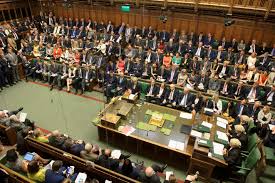
Even if comparisons can produce surprising and complex disconnects, it strikes me that—on the whole—the British are more attentive to their national politics than Americans. Their parliamentary system is also arguably better at making necessary policy and leadership corrections. Prime Minister Liz Truss was replaced by her party in 2022 after only 49 days. By contrast, America’s founders inadvertantly disabled half of the nation for years by enabling the governance of an aggressively reactionary president and his dithering majorities in Congress.
The vastness of American media and the uniqueness of so many inward-looking pockets (think of central Florida or the thinly populated Northern Tier) make the idea of a true American federation something of a fiction. We are good for July 4th parades, but less convincing as engaged members of a true national community.
One key effect is that we mostly welcome the idea of personal freedom more the work of securing it for the many population groups outside of the centers of corporate and political power. I know from experience that it is easier to be in a bubble of vastness that is the far west without giving as much thought to decisions made 2000 miles away in Washington D.C. Aristotle though the ideal size of a democracy was a few hundred people who mostly knew each other.
And so it is a worthwhile question to ask if the nation in its full geographic and demographic diversity will inevitably be too shallow to be effective at pulling off mastery of its complex systems of shared self-governance. As a simple measure, voter turnout for elections in many northern European countries is well above 80 percent. In the U.S., a good presidential election year every four years might only produce a rate in the low 60s.
In comparison to our peers, Americans are situated in the middle of most lists of advanced societies in their degrees of participation in civic affairs. Many are committed and active in local politics, school-related work, and important voluntary work. There is no clear march toward disengagement, but as Pew Research Center data and other studies point out, there are relatively high levels of suspicion of institutions that  feed and renew our public life. Congress, universities, The Supreme Court, news organizations, foreign students and the political parties show up in public opinion data as having low levels of public approval. In broad terms, discourse across the culture flourishes in some entertainment, sports coverage and social media: all which function as distractions from the challenges of meeting the demands of the future. In terms that would have puzzled the founders of the country, self-amusement seems to consume our greatest use of time and energy.
All of these problems are made more complex by being spread over a huge nation extended far beyond what most theorists of democratic states would consider ideal. And then there is the additional and troubling paradox of its many shallow citizens who skip the news habit while feeling comfortable voting for a political incompetent with dreams of gold palaces.

1 It is always important to add a caveat when talking about nations. We want to singularize conclusions, turning simple examples into synecdoches representing the whole. But one-stands-for-many reductions can easily lead us astray.