Tag Archives: Leonard Bernstein

music pixbay

The Perfect Note?

It is an intriguing idea that we have a natural affinity for certain sounds, shapes and forms.

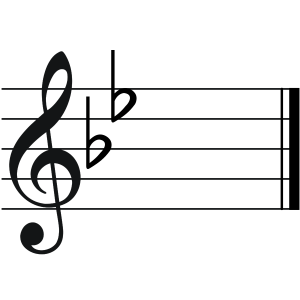
Perhaps you’ve heard the story about the attraction that the pitch of B-flat major has for humans. For years musicians and some scientists have speculated that this single note shows up as the home key in a lot music, as well as other non-musical parts of our lives.  Is B-flat our homing frequency?  What accounts for all of the major pieces of music written in this key?  Is it an accident that a black hole in deep space seems to “sing” that note, albeit some 50-plus octaves below the pitch we know as middle C? Is it more than a coincidence  that our electrical system “hums” at 60 hz (cycles per second), close to the audible lower octave B-flat? And should we make anything out of the anecdotal evidence offered by some that human structures seem to sustain sound especially well in the neighborhood of the same pitch?

Actor Ethan Hawke’s interesting documentary Seymour: an Introduction (2014) includes a passionate pianist who is impressed by how many  composers were drawn to producing  works in the key of B-flat major, including concertos and symphonies by Beethoven, Mozart, Bach, Brahms, Schumann, Prokofiev and others. Is it the perfect note: a kind of passkey that resonates with something inside, as the opening of  Brahms Piano Concerto in B flat major.

A slightly broader question was asked by the composer and conductor Leonard Bernstein in the first of his still fascinating Norton Lectures given at Harvard in the early 70s (available on YouTube). He argued that the idea in linguistics of an “innate grammatical competence” that allows even young children to form sentences may have its counterpart in how we are  “tuned” to the intervals that make up tonal music. The idea is that we already “know” a harmonic series like a triad of C, G and E without having to learn it.  Any set of notes built off the overtones of a low first note always sounds “right.”  We expect a simple musical work to find its way along what music theorists call the “circle of fifths” within a chromatic or diatonic scale.

To be sure, a more specific theory asserting a special affinity for a single absolute pitch has its problems.  After all, Mozart’s B-flat was lower than ours. In his time the nearby tuning note of A was more likely to be around 420 hz rather than the more standardized 440 hz today.  But it is an intriguing idea that we may have a natural synchronicity to natural sounds, shapes and forms.  Think of how easily we associate music composed in a minor key as darker and more solemn.  When a tune “resolves” in a major interval it tends to perk us up.  We don’t have to be trained to notice the effect. Most of us are born into this world discovering that we have an unquenchable thirst to hear modulations of sound that build out from (and occasionally violate) music’s fixed chromatic intervals.

The motive to confirm a ‘hard-wired’ need is naturally interesting, leaving us at the doorstep of a theory of forms. Consider the rhyme that falls at the end of a second line of a poem; or the AABA structure of a pop song that so easily satisfies our expectations by delivering the “B” refrain; or the third act resolution of conflict that developed and festered in Act II.  All are narrative forms that have become routine templates for thought. They sink their claws into us (or were they already there?).

It would might take some magical thinking to identify a form that is as controlling on us as something like the inviolate laws of physics. Even so, the question of identifying perfect resonances–responses tuned to our essences as humans–is intriguing.  We are usually better at naming specific human processes than single universals that may function as reliable North Stars. To be sure, religion fills this need for many. But it’s exciting to consider the idea of a physical property that exerts an enigmatic and irresistible pull.  If we need a visual reference, perhaps form as “deep structure” is perhaps like the inscrutable black monolith in Stanley Kubrick’s 2001: a Space Odyssey (1968). The possibility that anything can be the organizing principle that animates the rest of our world is always exciting.
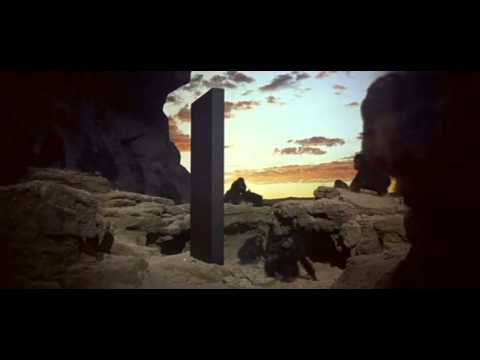
    Still from 2001: a Space Odyssey                                                                                   

Might Their Hatreds be Tamed?

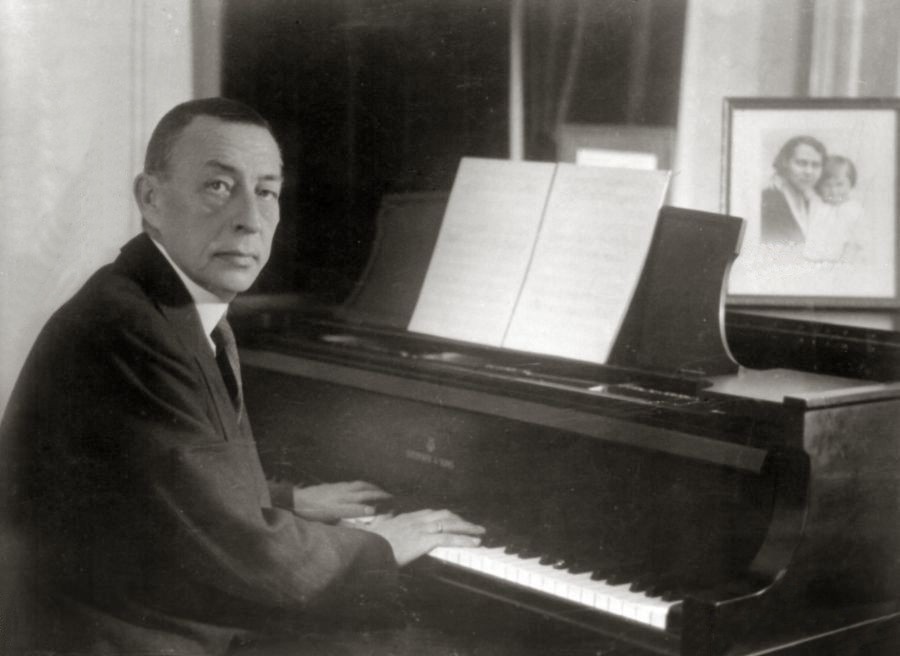
Sergei Rachmaninoff Wikipedia.org
Sergei Rachmaninoff                               Wikipedia.org

The romantic in me wants to believe that a person filled with the poison of division might learn from seeing other human beings literally acting in concert.  

Never mind that some of the people we encounter have rough edges.  It’s the murderers and vengeance-seekers we need to fear, like those who sow justifiable terror in the citizens of Turkey, Syria, Afghanistan, and a host of other states that are struggling to again become civil societies.  News of terrorist mayhem in the Middle East and elsewhere feeds the obvious conclusion that human misery often flows from tribal tensions.  But our knowledge in a 24/7 satellite-saturated world hasn’t really helped us understand the cultural origins of long-held animosities. We see effects more than their causes. Even so, with enough optimism it is possible to imagine how we might begin to tame regional hatreds that feed the impulse in some to fight to the death.

Call me naive, but I wish every actual or future ISIS executioner would volunteer to spend an evening listening to an orchestra of diverse members perform something like Sergei Rachmaninoff’s Second Symphony.  I’d especially wait in anticipation to see if their hatred might begin to melt under the warmth of the Third Movement.  The romantic in me wants to believe that a person filled with the poison of division might learn from other human beings literally acting in concert to produce something transformative.  You know this Adagio of the Symphony, where the melody is passed from the violins to a clarinet, back to the French horns, and eventually back to the strings. It’s probably the most breathtaking theme this melodic Russian master ever wrote.

https://www.youtube.com/watch?v=8bneQ26bHXk

This version by the Radio Philharmonic of Amsterdam is followed by comments on U-tube such as “beautiful,” “sublime,” “transfixing,” “magnificent,” and “incredibly emotional:” these, in a space usually owned by trolls.

Is it possible to find transcendence in a lyrical phrase?  Can music soften anger and the kind of fixed rage that feeds the impulse to destroy?  Could it be that we are looking for peacemakers in all the wrong places?

The idea of using music as an arena of shared experience is partly behind the efforts of Daniel Barenboim and the late Edward Said, who in 1999 founded the West-Eastern Divan Orchestra.  The group is made up of Israeli, Palestinian and other Arab musicians.  When war broke out in Gaza in 2009 Barenboim noted to audiences on both sides of the Palestine/Israel divide, “We aspire to total freedom and equality between Israelis and Palestinians, and it is on this basis that we come together to play music.”

The same impulse to return us to our shared humanity occurred In 1989, when Leonard Bernstein celebrated the end of a divided Berlin by performing Beethoven’s 9th Symphony at the wall with an international orchestra of musicians and singers.  He noted that “we have not yet found ways, short of murder, to act out our suppressed rages, hostilities, xenophobias, provincialisms, mistrust and need for superiority. We still need some kind of lower class as slaves, prisoners, enemies, scapegoats.”  The concluding section of the symphony is its triumphal “Ode to Joy,” which can be easily understood as an affirmation of the new freedoms possible in a country made whole again.  Americans probably also heard a victory anthem at the rapid demise of a repressive Soviet Republic.  But Bernstein meant that Beethoven’s music should mean more, noting that “somehow it must be possible to learn from his music by hearing it. No, not hearing it, but listening to it, with all our power of attention and concentration. Then, perhaps, we can grow into something worthy of being called the human race.”1

___________________

1Bernstein quoted in Greg Mitchell, “When Bernstein and Beethoven Celebrated the Fall of the Berlin Wall,” The Nation, June 1, 2013.

Comments: Woodward@tcnj.edu