“Swoon” is an old but good word. I see it as a particular form of ecstasy.
There are rough estimates by those that study such things that perhaps five to ten percent of the population experience what is sometimes called “musical anhedonia.” This is the clinical term used to describe a person who is mostly immune to the pleasures of music. The late polymath and neurologist Oliver Sacks isolated and studied this phenomenon, which can be imagined as an unaccountably empty room in a person’s otherwise complex life. I would guess that there is an additional ten or fifteen percent who can’t muster much enthusiasm for any form of music. They would have probably included my father, who was in most ways a great dad. But for him music was a disposible experience: occasionally OK, but not worth much attention. During my high school years we had some tense exchanges over how much of my summer work money should be spent on the  glories of the Count Basie Band or North German organ music. Record stores were one of the joys of my life but alien places for him. If music meant anything, it was bandleader Lawrence Welk’s corny covers of pop songs on ABC television. Welk is perhaps what Jello with marshmellows is to those who love fine dining. We did the smart thing and declared a truce.
Ironically, a person’s musical anhedonia is probably harder on avid music lovers than the people with this trait. Those of us who are “sound centric” are surely mystified by others who are indifferent. We all know the experience of discovering that a person we are close to is not appreciating what is at the doorstep of their ears. The effect is like taking someone to the Grand Canyon and discovering that they see it as nothing special. What does not produce a rich and fulfilling experience in another can be a puzzle.
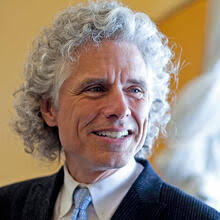 A comment once made by the influential psychologist Stephen Pinker partly reflects this unexpected vacuum of feeling. He once compared music to “auditory cheesecake:” certainly OK, but “biologically functionless.”
Really?
The statement is stunningly dismissive. The comparison of a piece of unhealthy food with a consequential form of human expression suggests the kind of indifference that is so puzzling about musical anhedonia. More than most, a psychologist should know that most of us need music to complete the space between what we can verbalize and and experience that goes beyond what words can express. Music can be its own therapy.
The Victorians understood what it meant to “swoon” over something. The word has gone out of favor but was usually meant to suggest a profound emotional response to someone or something: a trigger to feelings of ecstasy. Old it is. But it’s a good word, and it works for all of us who can name exactly what it is about a musical forms that can send us to welcome arcadias. Those prompts represent our musical melting points: perhaps a chord sequence in an old pop hit, a mix of voices or instruments, the “resolution” of a dark section of a classical piece that resolves in sunnier key.
There were surely saw swoons to see a few years ago in a video concert of In Performance at the White House. The guests were in the East Room listening to singers that meant a lot to the Obamas. When the singer Usher led into the first chords of the Marvin Gaye classic, Mercy Mercy Me, the faces of the staffers and First Family in attendance lit up like signs in Times Square. Check out the video below. The audience swayed; they smiled; many found it impossible not to move with the rhythm of Gaye’s catchy song. It’s as good a representative moment as any to sense why so many musicians and appreciators live to listen.