It is a given in some schools and universities that more time should be devoted to job training, with less effort helping students build on their latent passions.
Much of the news about schools and universities is dominated by the current fashion of complaining about the “soft” and “wasteful” curriculum of the humanities and liberal arts. It is a given in some institutions that most funding and hiring should be organized around direct career-related majors, with less resources available which would help students discover their under-developed passions. One could also hope that there would be more campus-based experiences that might offer new insights that would extend beyong their inherited religious and political beliefs.
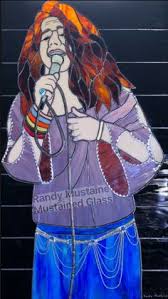 Luckily, most students still want more out of their education than “hard skills” that come with good programs in engineering, business or the sciences. Many have also had enough life experience with music, theater, film, and narrative writing to get a taste of what is possible in a full and busy life. Only later, perhaps, will they realize that these also cultivate “soft skills” that are respected by all sorts of forward-thinking organizations.
Enter the humanities of history, the fine arts, literature, philosophy, rhetoric and cultural studies. Whatever claims we can make to our own civilization rests with our willingness to engage with naturally creative and playful minds. Indeed, in the humanities creativity and innovation are essential and, when done well, will take a person far beyond what machine learning can do. As Forbe’s Benjamin Wolff notes, “Graduates in disciplines like history, literature and philosophy are comfortable with ambiguity and contested meaning; they know how to detect bias, contradictions and narrative gaps in large blocks of text….” These are skills for critical thinking, and only the start of what is possible.
Speaking more broadly, the Atlantic’s David Brooks sees the pursuit of passions in the humanities as an enduring strength of our universities, which can channel the nascent ideals of our best students in ways that help them become more complete persons.
“Life is essentially a battle between our noblest aspirations and our natural egotism. Humanistic education prepares people for this struggle. Yes, schooling also has a practical purpose—to help students make a living and contribute to the economy. But that practical training works best when it is enmeshed within the larger process of forming a fully functioning grown-up—a person armed with knowledge, strength of judgment, force of character, and a thorough familiarity with the spiritual heritage of our civilization.”
 If Brooks seems a bit abstract, many of us can sight direct paths to our life’s work through what might first seem like back doors. For example, and in a personal account I have related before, only through the forbearance of a high school drama teacher was I allowed to play a small role in the senior class play. There were so few of us in the class that all hands were needed. The truth was I was completely unconvincing even with just a few lines, but also in the ways I chose to wander around the stage seemingly without purpose. Soon I learned about “blocking” a play, and especially about the need to find a character’s motivations for their actions.
In this distracted teen a light went on. The idea of performance as a durable paradigm never left me. That insight began to grow a few years later after discovering related ideas in the language of self-presentation common to classical of sociology and literary theory. I was clearly no actor, but that moment on a high school stage was enough to shape a long career exploring the ways we relate to each other through politics, speech and movement. It started with an exceptional high school drama teacher and continued with the help of colleagues that have included medievalists, sociologists, biographers, filmmakers, political scientists, journalists, art historians, photographers and American historians.
What modes of the humanities enterprise deserve our support? My list is only suggestive, since there are wonderful specializations within each discipline:


- Art History
- Studio arts
- Fiction and Nonfiction Writing
- Journalism
- Rhetoric, Logic and Argumentation
- Cultural studies
- Classical Studies
- Media Theory and Analysis
- American Colonial History
 Music Theory and Performance
- Play and Screen-writing
- Filmmaking
- Peformance Studies
- Acting
- Philosophy
- Scenic, Lighting and Sound Design
These are mostly offshoots of the classical liberal arts that have been part of the core curriculum in the world’s universities for hundreds of years.
What You Can Do
=>Contribute to community arts organizations.
=>Attend performances and exhibitions.
=>Support live music in the community.
 =>Visit and support local libraries.
=>Turn your children into avid into readers and writers.
=>Demand creative curricula that goes beyond teaching to standardized tests.
=>Help your children understand the varied cultural history of the nation.
=>Push back when friends express what was a misplaced sympathy because of your daughter’s decision to pursue a college major in philosophy. We knew better. She and I had no doubts about her coming successes.


 Fortunately, the sad state of our national politics does not disallow the chance of cultivating other forms of affiliation. We need to find frames that will keep us in awe of the miraculous efforts of others.