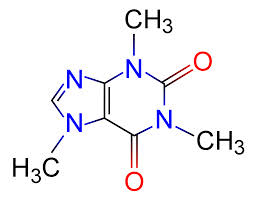
Caffeine helps us capture a good thought when it drifts by.

As I first noted here in 2015, many of us owe the completion of some projects calling for mental rigor to a certain level caffeine. Some may avoid it to sleep better. The rest of us can take heart that we may be ready to catch a thought when it drifts by. Even Johann Sebastian Bach understood the power of coffee, writing a comic opera about its addictive attractions. And some of his fugues unfold at Formula 1 speeds.
It is heartening to learn that this addictive stimulant wins qualified support from a great composer as well as medical researchers, at least for three distinct reasons. First, new research suggests that It’s use correlates moderately with lower rates of dementia. Second, there is also new evidence that it may slightly extend our lives. In addition, and as already noted, it may help in completing difficult cognitive tasks. Regarding this third point, caffeine in coffee and tea can help in the challenging business of doing the work of connecting with others. It can enhance our urge to locate the best ways to make a complex idea or explanation stick. Can yet-unknown medicinal uses of essentials like pizza or donuts be far behind? I’m hopeful.

As was reported in the Atlantic over a decade ago, caffeine “hones our attention in a hyper-vigilant fashion.” It also “boosts energy and decreases fatigue; enhances physical, cognitive, and motor performance; and aids short-term memory, problem solving, decision making, and concentration.”
We have more than a few studies to suggest that writers and others who create things can indeed benefit from the stimulation. Most of us are at least a little better in finding our thoughts when a degree of mental fog is washed away. For some, writing works better when we catch a morning wave of several cups. Others like Bach can work best at night, when the rest of the household is quiet and caffeine can revive some flagging energy.
As to the larger issue of dementia, there are no cures, but recent evidence indicates that caffeine and a regular routine that includes reading and writing may delay its cognitively isolating effects a little longer. A large study reported this year in the New York Times found that caffeine cut an experimental subject’s chances of dementia by about 20 percent.
 Even with these advantages, there’s reason for some caution if a person’s work includes addressing an audience. The problem is that an activity that is essentially a kind of performance may trigger what amounts to a double dose of stimulation, given the natural increase of adrenaline that comes when we face others in a public setting. For most of us, a modest adrenaline rush is actually functional in helping us gain an edge in oral fluency. Like caffeine, adrenaline makes us more alert and maybe just a little smarter. But combining what are functionally two stimulants can be counter-productive. They can make a presenter wired tighter than the “C8” string at the top end of a piano. We all know the effects. Instead of the eloquence of a heightened conversation, we get a jumble of ideas that are delivered fast and with too little explanation. Add in a vocal pitch that will probably be higher than our natural range–along with a dry-throat from the diuretic effects of caffeine–and you may not be quite ready for prime time.
All of us are different. But to play the odds to your advantage, it is probably better to reserve the use of strong coffee for efforts of invention rather than vocal presentation.