Sometimes a person comes up with the right words at just the right time: the result of good timing, a sense of irony, and an apparent simplicity that may yield a deeper truth.
Responses to others can be kind or cutting, playful or hurtful. They are at their worst when one of the parties can hide behind anonymity. One effect is that our political climate has become coarser and more toxic. It doesn’t help that our President seems to have no sense of humor.
Here are just a few favorites of the whittier kind heard from politicians, past and present, residing on both sides of the Atlantic.
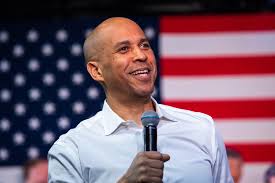
Presidential candidate Cory Booker is frequently asked about race as a factor in the current political climate. One recent response: “I’ve had lots of crazy things said to me, like, ‘Is America ready for another black president?’ And I’m confident it’s never been asked of a white candidate, ‘Is America ready for another white president?’”
[Nancy Astor and Winston Churchill had a notoriously rocky relationship in and out of the British House of Commons. Both were sharp witted and ready for a quick retort.] Churchill once asked her for some advice on how to proceed in the House of Commons. She responded with a simple “Why don’t you come sober, Prime Minister?”In another exchange that supposedly took place at a party, Lady Astor said to Churchill, “If you were my husband, I’d poison your tea,”to which he responded, “Madam, if you were my wife, I’d drink it.”
[In a recent exchange in Parliament the loquacious MP Anna Soubry dressed down government minister Michael Gove over his support of Brexit. She ended her statement with a pointed question, to which Gove responded,] “The right Honorable lady is a distinguished criminal barrister. Now I know what it is like to be cross-examined by her. But I also understand why Lawyers are paid by the hour.”
[President Obama loved to work with writers to come up with quips for the Annual White House Correspondents Dinner. He seemed to enjoy sparring with journalists, perhaps because he was a successful writer before assuming the Presidency. He also relished quips playing off of absurd Republican assertions about his personal history.] A favorite: ”These days, I look in the mirror and I have to admit, I’m not the strapping young Muslim socialist that I used to be.”
And there’s also this: ”The fact is I really do respect the press. I recognize that the press and I have different jobs to do. My job is to be President; your job is to keep me humble. Frankly, I think I’m doing my job better.”
John Kennedy won the presidential election in 1960 by a close margin. Charges during the campaign that his wealthy father was rigging the result led to this observation by Kennedy, delivered in his usual understated style: “I just received the following wire from my generous Daddy: ‘Dear Jack, Don’t buy a single vote more than is necessary. I’ll be damned if I’m going to pay for a landslide.'”
A goal of any presenter should be to show up early and troubleshoot all of the equipment. That cuts your chances for a problem by perhaps half.
If you give presentations to groups you know the anxious moment when it dawns on you that the equipment you counted on is not working. A teacher confronts this more every year, with no shortage of PowerPoints, streamed content, websites and cued videos to manage while still keeping a class on point. These external elements can be so numerous that almost every class needs its own ‘pre-concert’ sound check. Lucky are the lecturers and old style speakers who must simply offer a well-organized presentation in a package that is pleasant enough to hear. The rest of us who teach regularly seem to have fallen into the habit of running ersatz Youtube channels.
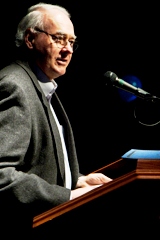
A recent address at Harvard represents this older style. House of Commons Speaker John Bercow explained his role and this peculiar moment in British politics to a packed room with a magnificent timing and his usual panache. His prose has the spaciousness of someone who knows he need not rush or show pictures.
In the meantime, the rest of us are scrambling for the clicker to keep our students engaged.
In a larger auditorium the chance for things to go wrong is greater. Microphones can be unreliable and sometimes, work only intermittently. Outside noise can intrude. Large spaces can have challenging acoustics. And ad hoc set-ups of projectors, cables and computers can easily let us down.
A goal of any presenter should be to show up early and troubleshoot all of the equipment. That perhaps cuts your chances for a problem by half. For the risks that remain. . . well, you are pretty much on your own. At a minimum, prepare by forcing yourself to consider what you will do if a key piece of equipment resists all attempts to revive it. Think of this as your Plan B.
A few tips:
Be sure the mic works as its supposed to, without feedback noise and with as much clarity projected into the room as possible. But also be aware that if you are wearing it, you may be ‘live’ to the audience longer than you intended. In addition, repeat any questions that come from the audience. They may not be able to hear each other.
Resist turning PowerPoints into a written lecture. Remember that you need to remain the primary agent of communication.
Never set PowerPoint slides to run on a timer. I think the most dysfunctional presentation I ever saw used just such a timed sequence which, of course, set a pace the speaker could not keep up with. She faded into total confusion as pictures behind her appeared and vanished, seemingly at random.
If a space is noisy, ask if the air handling system can be turned off just for the length of your presentation. As the presenter you need to assume the obligation of making sure you can be easily heard.
Put new batteries in the wireless remote you may be counting on. Double As are the usual size.
Ask the audience to move closer if the room is not full.
Keep your sense of humor. Nerves or a flash of anger can make audiences uncomfortable. Think of an equipment failure as your chance to show that you are a change agent for all seasons.
As a last resort, a little tap dancing might buy some time.