letters in pile 1 e1591899273154

Malapropisms

Some thoughts inevitably wander off course.  A person’s consciousness may have a clear fix on an idea, but the neural pathways that produce speech have to be able to deliver it.

A friend recently emailed a couple who had sold a property they owned in Florida after many attempts, noting that they must be glad to finally “be rid of their condom.”  I’m sure they eventually figured out what she meant. If all else fails, blame the autocorrect function on the computer. I similarly recall an errant explanation to students describing the risks to American troops stationed in Afghanistan and Iraq.  I noted that soldiers were constant targets for “exploding IUDs.”  It’s an example of a wrong turn on the highway to fluency that my colleagues won’t let me forget.

A malaprop is a near miss: the wrong word or phrase used in discourse that was striving for an idea that sounds similar.  When President Trump recently talked about the “oranges” of the Mueller investigation, we can figure out that he probably meant “origins.” It’s the same process that showed up in his press conference with the chairman of Apple, known to the rest of us as Tim Cook. The orange President repeatedly referred to him as “Tim Apple.”  Clearly, older minds are not as nimble as younger ones.
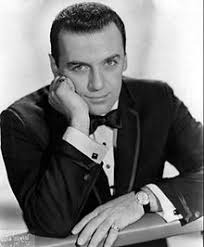
                  Norm Crosby

Malaprops were a source of a lot of American humor in the last century.  Performed routines featuring mangled English were often a staple of earlier radio and television comedy.  Think of Gracie Allen, Mel Blank or Norm Crosby. As Marjorie Gottlieb Wolfe recalls, audiences loved Crosby’s references to “human beans,” “trousers that need an altercation,” a sports idol who is “an insulation to young players,” and human bodies that can be “subject to so many melodies.”

Back then there was more laughing and less mocking. After all, like puns, malaprops that we notice require a degree of literacy; the fun is in recognizing the violated grammatical or lexical rules.

Mastering the burdens of language is a lifetime process. 

In recent years politicians have supplied all the miscues we need to keep us in grinning.  Without doubt, George W. Bush remains our single best source of a public figure whose thoughts have wandered into the wilderness.  He seemed to know what he wanted to say, but sometimes lacked the verbal skills to actually deliver it.

Of course the problem turns more serious when the speaker or writer is not aware that they have used the wrong words.  The joke is then on them, feeding the impression that they are perhaps not as swift as we might have thought.  Such is the power of literacy signifiers. Mastering the burdens of language is a lifetime process.

red bar graphic

Paying for the Quiet

We clearly thrive an aural stimulation.  But it’s doubtful we were meant to handle the high walls of noise that modern life throws up.

Loud and intrusive racket is a part of living in the 21st Century.  Many of us hardly give a second thought to the noise pollution around us:  restaurants with patrons drowning in the din, apartments a few feet from raucous traffic, sidewalks inches from the continuous roar of traffic.  Then there are also theaters and music venues that pitch amplification beyond the margins of what the inner ear can tolerate. If there should be an unexpected lull as we move from place to place, earbuds are at the ready to fill in the gaps.

On my campus a few of us battle teams of leaf blowers who spew their pollution and noise under classroom windows.  The campus looks quieter than it is.  But this inconvenience pales compared to a whole block on the West Side of Manhattan that is apparently in need of tranquilizers. Apparently one of its uber-rich among them is noisily digging a 36-foot hole for a mammoth swimming pool and theater to go under their $100 million dollar townhouse.  According to the New York Times, one neighbor found solace in a quote attributed to Schopenhauer: “The higher your tolerance for noise, the lower your intelligence.”  We may think we thrive an aural stimulation.  But it’s doubtful we were meant to handle the high walls of noise that modern life throws in front of us.

Of course quiet is not an absolute value.  I know plenty of sane people who function with some degree of auditory tumult.  But  I’m always amazed at seemingly oblivious patrons in public establishments, where the sound is barely less than what can be found next to a runway at O’hare. The phrase “I can’t hear myself think” is more than a figure of speech. Thankfully, many still regard any space that can foster a whisper as an island of sanity.

It follows that there is a price to be paid if a person prefers a buffer from the noise of ordinary life.  Prized residential property in most vertical cities almost always exists in the upper floors of a residential building.  A high view in an apartment complex is in several ways “above it all.”  Aside from a better view, these homes are acoustically more isolated.  Sound dissipates as it travels up and away from the reflective surfaces of the street. Rents thus rise dramatically to reflect that height advantage. They are typically even higher if residential spaces are built with double or triple-glazed windows. Vacant spaces between the glass are devoid of air, the prime medium for the transmission of sound.

Deep in the woods in many parts of the United States city dwellers are shocked to hear their heartbeat.

The ultimate escape from noise, of course, is out of the city and away from busy roads and airplane glide paths.  In a secluded forest in many parts of the United States it is possible to hear your heart pump: a phenomenon that can catch a city-dweller off-guard. It is even quieter after a few inches of snow.

I only realized how quiet living in deep woods could be until September 11, 2002.  Airspace in the United States shutdown for days after the disastrous attacks in New York and Washington, with a resulting atmospheric stillness rarely known to those of us who live under the air highways feeding the nation’s airports.

In the meantime, we buy quiet that we can “see” in the bucolic images of landscape paintings and photographs.  I suspect that seeking the silence of an open space is an unsung function of a lot of landscape painting. Alternately, we may set aside time for activities like meditation, prayer or yoga.  All are meant to happen in calmer surroundings.  With regard to meditation, it seems that we now pay to learn practices that happened to previous generations naturally. A farmer taking a break in a corner of his field would be puzzled if asked by a passerby question if he was meditating.  Functionally, however, the peace that is possible in the middle of a field gives his brain the same kind of break.