It would be nice to go back to a simpler time, when the worst sonic disruptions included playing Barry Manilow music to discourage convenience store loitering.
It figures that when human ingenuity and perversity are combined, the gift of hearing can be turned against us. That’s what happens when we use sound technology to attack others. Scare cannons, screeching loudspeakers, flash bombs and deliberately inappropriate music are just some of the forms of sound used to strike out at others.
A recent report from the National Academy of Sciences alleges that someone used sonic guns to beam radio waves into the American embassy in Havana. In early 2017 Ambassador Jeffrey DeLaurentis held a classified briefing raising the possibility that American staffers were being targeted by a sonic device perhaps mounted on a vehicle. Many had real but vague symptoms. Soon after, he took the precaution of asking embassy personnel to sleep in the middle of their rooms and away from windows. Six months later he would order the evacuation of nonemergency staff and families.
Tear gas, rubber bullets and stun guns all leave marks of their effects on flesh or the psyche. But individuals traumatized by sound will exhibit less external evidence that they have been attacked. Yet, as any viewer of science fiction films can attest, it seems plausible that exposure to high frequency energy could inhibit a person’s cognitive capacities. Most disturbing of all, the research done on a selection of Americans and Canadians in Havana confirmed at least some damage to the bones of the middle ear, and to the inner-ear canals that help an individual keep their balance. Several years ago Michael Hoffer, an otolaryngologist at the University of Miami, found these nearly immobilizing effects in some of the 50 embassy staffers, again suggesting the potential for near total incapacitation.

What gives the latest report some credibility is the known history of Russian use of sonic devices.
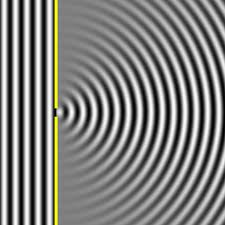
Skeptics who have since studied the Havana Embassy episode argue that there are reasons for doubt about claims of a sonic attack. Their most convincing argument is that ultra-high frequency waves do not easily penetrate buildings or dense materials. I haven’t read the latest report, but it is possible the radio waves they allege may have been in frequency ranges that could penetrate hard surfaces. The difference is in the length of the waves. Low frequency radio waves easily pass through solid materials, as any listener of AM radio can notice. Shorter waves such as those in the FM band are more easily blocked, which is one reason you may lose a station if you drive your car behind a mountain. This blocking also explains why a microwave oven is relatively safe if the door is properly closed.
Two alternate theories for the sonic attacks in Havana also can’t be dismissed, though seem implausible to some who have looked at the Havana evidence. One is that local crickets are very loud. Some residents in Cuba say their 6000 Hz pitch can literally drive you crazy. Imagine doubling the loudness of the cicadas and crickets we hear in August in the northeast. There is also the social phenomenon of a “collective psychogenic disorder,” where symptoms of one individual begin to trigger perceptions of the same problem in others. If a condition is top of mind, we tend to look for it in ourselves. There are a lot of people seeking Covid-19 tests because they have linked the effects of their winter allergies to the virus.
Ultimately, what gives the latest report some credibility is the known history of the Russians to use sonic devices, a pattern first noticed when the American Embassy in Moscow experienced high energy waves beamed at the building in the 1970s. But that was primarily for eavesdropping, not trying to inflict brain or nerve damage.
We may never be able to fully reconstruct what happened in 2017. But we can now place instruments in sensitive locations to recognize high levels of microwave radiation. Incidentally, that would probably include standing for an extended period under the broadcast antennas on top of the Empire State Building. It would be nice to go back to a simpler time, when the worst sonic disruptions included playing Barry Manilow music to discourage teen loitering in front of convenience stores.