red bar

The Appeal of Being Inside A Fence

Brexit seems like a self-inflicted wound. It turned legitimate grievances about questionable regulation into a grotesque  overreaction.

The recent departure of the United Kingdom from the European Union is a good time to ponder the now common impulse around the world to offer voters the candy of cultural segregation. Brexit was about many things: everything from the price of butter in the shops to tighter controls on who can visit and stay within the United Kingdom. Donald Trump’s southern wall is a cruder manifestation of the same impulse, as were the recent chants of “USA! USA!” from thugs in the halls of the Capitol.

Around the world nationalism is having its moment against internationalism. This resurgence has hobbled the work and play of many who rightly sense that their futures depend on engaging others across political borders that are out of date by hundreds of years.

Until this year, residents of the U.K. had an open ticket to explore an incredibly diverse part of the world.

 

The idea of forming a kind of United States of Europe was one of the real international achievements of the Twentieth Century, tossed aside by expensively-educated Tories looking for an easy way to mollify restless voters. It was a modern marvel to witness France, Britain and Germany working together to open borders and minds. And so many benefited, especially younger Brits and their continental counterparts who understood that it was now their birthright to explore a range of traditions and languages only a train ride away. It wasn’t just businesspersons who woke up in Britain and met clients for lunch in Paris. Swedes and Scots, Northern Irelanders and Greeks, English and Austrians traveled a vast and open region encompassing 28 countries. Up to the end of 2020, U.K. residents had greater opportunities to go to college, work, and to explore an incredibly diverse part of the world. Musicians could do the same, accepting a gig in an Italian club or French theater with a minimum of paperwork. Visas and work permits were relics of the last world war and a more suspicious age.

Britons will need to relearn the rules of foreign travel in ways that many still inside the EU will not. Most European youth and some cross-border workers on the continent have escaped the effects of Brexit. But a British student or musician is now more confined to their shrinking home country, which has triggered new pleas for independence in Scotland and Northern Ireland. Scotland especially benefited as an equal trading partner with other nations in the EU.
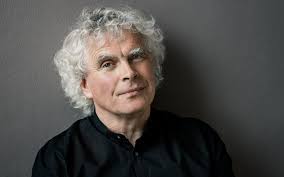
It is surely no coincidence that Britain’s most beloved orchestra conductor, Liverpool native Simon Rattle, just announced that he is seeking German citizenship and will abandon his post with the London Symphony Orchestra. Rattle has made his point: as a musician he wants no part of a English provincialism.

It is reassuring that Joe Biden generally takes a dim view of Britain’s attempt to go big on patriotism and think small as an island. Biden’s internationalist instincts represent at least a momentary pushback against the separatism that fueled Brexit. But he will have his hands full with a withered GOP that still panders to a base of aging white Americans wishing for a monoculture that never was.

In the end, I seriously doubt that Britons are going to feel any better about their politics, save for those who viewed the rest of the world as much “too foreign” to visit.  There are some signs that buyer’s remorse may already be setting in. But if they are still able to warm to the new status quo, they will come to resemble the travel agent I once met near Birmingham in the center of England. Even in middle age she had yet to find her way to Scotland just a few hundred miles away.

black bar

Another Vaccine Story

The sense that help is on the way also spread through American households in the mid-1950s.

The current effort to vaccinate citizens against the COVID-19 virus rings bells for people my age, some of whom became the first to receive the Salk polio vaccine in 1954. Recent stories celebrating the apparent success of the new drugs are a reminder of the maelstrom of parental dread about polio that few children probably understood. To be sure, my eight-year-old self was particularly clueless to the risks of being around other kids, or going to parties or swimming pools where the paralyzing disease could attack. Back then, the habit of many parents was to worry alone about the risk of a paralysis that could immobilize their children. Those conversations were mostly saved for other parents. Anyway, kids have a natural habit of living in their own world. Then it was music, radio and bicycles. If we were skating on thin ice as potential victims of a disease, we were only dimly aware of it.

What a contrast with the current pendemic. Our more invasive media mean that there is no such shielding of children from the worries and disruptions of the virus.  COVID-19 is their crisis as well.  As is often true with kids, many are handling it better than the rest of us.

The current sense that help is on the way similarly spread through American households in the 1950s. Jonas Salk at the University of Pittsburgh in the Oakland section of the city led a team that found a workable vaccine. All that was left was to manufacture and distribute it, but in reverse order of today’s vaccine roll out. Kids went first because they were most at risk.

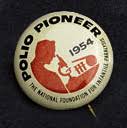
Like many others, my third-grade class at Ashley Elementary School would be among the first “polio pioneers,” having volunteered in true Ashley fashion by doing what we were told. It was not that big a deal to get the shot. And there is no doubt the Salk and later Sabin vaccines saved millions from paralysis, withered limbs and leg braces.

The subject didn’t surface in my still unfocused brain until junior high, when I could no long make my legs flexible enough to run. I was stiff most of the time, choosing activities that did not require speed or agility. I warmed the bench in little league, put on weight from too many visits to the Dairy Queen, and preferred to roam surrounding neighborhoods on my bicycle. Only after a checkup, did our family doctor begin to wonder about my stiffness. The most probable cause: the dose of vaccine given to me may have contained some of the virus that had not been fully neutralized. Some minimal physical therapy took place in Denver’s children’s hospital. But the best recommendation was to have me join the track team at my tiny high school when my family moved to the nearby mountains. I was on the team not to compete, but to get back to level of mobility comparable to my peers. It was a chore, since my speed was only slightly better than an enormous shot putter who joined the group for fun. The two of us inadvertently reenacted “The Little Engine that Could” on every slope.

I would not say I had polio. Even while it may have been the cause of my symptoms, the vaccine surely spared me the full effects of the disease. If anything, over the years the Salk Vaccine made me a stronger believer in the power of childhood vaccination. Watching a recreation of F.D.R.’s struggle with polio was the tipping point for a degree of self-awareness. His legs were so sapped of energy that he was carried like a child when he had to be moved to places that were beyond the reach of his wheelchair. Viewing the film as a high school senior, I began to realize that I had perhaps skated closer to the edge than I knew.

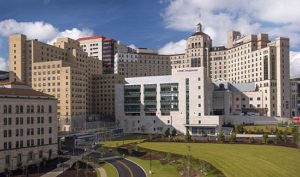
                                           UPMC Oakland

Sixteen years later I began a graduate program at the University of Pittsburgh, trekking daily from my apartment on Craft Avenue up to the University about five blocks north. In my daily walks to the center of campus, I never failed to be in awe of the sprawling medical and public health campuses of the University of Pittsburgh Medical Center, their massive structures made even taller as they marched up the steep hillside above Fifth Avenue. UMPC is how God would want a vast medical complex to look like. It was enough to always remember that this is the spot where my childhood was given both a medical challenge and reprieve. To this day the geography of Pittsburgh is still my reference point for thinking about how dedicated researchers can suddenly tame a terrible disease.