[This post was written in a while back, but the problem it identifies has not changed. It is still a dubious enterprise to direct a comment to another online without revealing who you are.]
 If here are pleasures in delivering anonymous and wounding responses, they make a mockery of the familiar cant that the “internet wants to be free.”
Pick a polarizing subject in our national life, tie it to a news story, and then take your own tour of the rough music that passes for online comment. It’s a dispiriting side-trip. The migration of news and opinion to the internet has made it possible for virtually anyone to pass on their first and often intemperate reactions to news stories, opinions, and other forms of public discussion. Responding only requires a simple digital device and a reactive instinct that usually plays out in contemporary America as an oppositional style. Many comments can’t even rise above the crude invective of a schoolyard taunt.
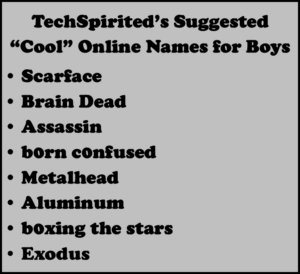 The problem is that online pronouncements from individuals using pseudonyms are allowed. With exceptions, online protocols accept the kinds of false identities that were once associated with characters in spy novels working behind enemy lines. Typical are the monikers used by individuals who responded to a Slate.com story about the recent Boston bomb attacks a number of years ago. Slate was careful and responsible in its reporting. But as with most news sites, the individuals who signed on to make comments concealed their identities. Readers heard from “Celtic,” “ICU,” “ddool,” “roblimo,” “Dexterpoint,” “Lexm4,” and others. “Celtic,” for example, noted that the suspects were “Muslims,” expressing mock surprise that any of them would produce “terrorist actions.” “Dexterpoint” decried “lefties” who he imagined to be anxious to confirm that the terrorists were not Muslims. Slate’s policy has not changed.
It’s easy to see such names as the avatars of souls who lack the confidence to be engaged as full dialogical partners with others. But putting names to our opinions is part of living in a civil society. Members of the Fourth Estate with an interest in sustaining the ideal of public discourse seem to be at cross purposes by allowing pseudonyms in their “comments” sections. They contribute to a fraudulent rhetoric that keeps sources in the shadows. Commenting on the behavior or opinions of named individuals in unnamed responses is at least a small act of subterfuge. While subjecting others to the burdens of public criticism, abandoning our identity absolves us from the same standard.
What’s in a name? More than we might first assume. Even if an identified person is not known to us, affirming who we are is an elemental expression of our integrity. It is the clearest token of our personhood that we possess, and its use should be a demonstration of trust for the community we seek to address. If this sounds hopelessly romantic, it isn’t. Try miss-identifying another person. The correction that is sure to follow is a reminder that we cherish our birthright as an important marker of our identity.
To be sure, there are circumstances when revealing a person’s identity might be their death warrant or, at least result in their inability to work. Whistleblowers, political refugees, and others who have engaged in acts that could lead to deadly retribution have at least a conditional right to anonymity. But for the rest of us, advocacy from behind a scrim of anonymity is at least a mild form of intellectual dishonesty.
Some of the advocacy spilling out at the end of web-based stories is benign. But significant portions of this clandestine commentary exhibit a kind of free-floating rage. Typical is the kind of jawdropping scorn toward a writer or subject that suggests a respondent who is intent on dismissing rather than engaging others. Add in a certain number of “trolls” who fire off repeated rounds of vituperation simply to provoke, and we’ve defined a corner of our public rhetoric that grows darker every time the light of authentic authorship recedes. For trolls, the drone attack of harsh judgment is made safe from retaliation or responsibility by never having to leave the private space from which the target was struck.
At its worst, this is the territory of the unqualified conclusion and the fantasized conspiracy: often a stream-of-consciousness unburdening of personal demons unchecked by the kind of self-monitoring individuals usually apply in the presence of others. Turned outward, this reactive rhetoric is often a jumble of histrionics from persons who seem to want a stage and an audience, but lack the mettle to do more than offer taunts from behind the curtain.
Internet pioneer Jaron Lanier has written about the online world’s erosion of an individual’s unique voice. In You are Not a Gadget he notes that “an impenetrable tone deafness rules Silicon Valley when it comes to the idea of authorship.” Because it’s a system defined by the vastness of interconnecting networks, a “hive mentality” of frenetic sampling effectively plays down the uniqueness of an individual perspective. Information is aggregated and sources are slighted. Material from one author blends into another. Content is registered and defined in files that are merged and merged again. As with Wikipedia, “data” is primary; and sources are mostly unknown.
Part of this process is bureaucratic. Organizations prefer to communicate under the broad umbrella of the corporate brand. And part is the result of an active culture of libertarianism that flourishes within the culture of internet technologists. As political journalist George Packer has noted, many have a relatively withered view of the requirements for managing a civil society, finding solutions to social dislocation in the mastery of better forms of “connectivity.” This view sometimes extends as well to the digital departments of even “traditional” news organizations far away from the Shangri-La campuses of Silicon Valley.
The problem is that connectivity is not communication. To merge the two is to confuse a “platform” with the far more variable nature of human content. So while these technologists still regularly hail the idea of the “information revolution,” with that phrase’s implication that data is just another commodity, the bias towards connectivity allows them to miss the critical question of how data is sourced. Media platforms are relatively static. But the qualitative measure of a source’s worth is dynamic. It depends on determining personal credibility as the first of many checkpoints that will allow us to assign value to an idea.
The long term effect of this de-emphasis on authorship is to put into virtually everyone’s hands a tool for issuing ceaseless streams of public invective. Against the earnest business of news gathering and straight reporting, we seem to take special pleasure in issuing attitudes of defiance. A columnist offers a particular “take” on a policy initiative. A journalist records the words of a political candidate. Another reports the known facts involving the suicide of a teenager. Even for straightforward reporting, multitudes seem to lay in wait to correct the record. One need only read a few offhand “comments” attached to a story about the death of someone’s troubled child to witness the violation of a fragile space where strangers don’t belong. There’s good reason why we retain an American demonology for the likes of secret police, post-war Hollywood witch-hunts, and hidden cameras. If anyone makes a serious accusation, everyone involved should be able to claim the right to know their identity.
Aristotle observed that an individual’s character is perhaps their most valuable asset. He subscribed to the conventional view that you reach others best when you offer an olive branch and the assurance of your good name. Instead, the oppositional language of denigration fills a simpler expressive need. What was once the art of public comment on national and community issues now seems more like an unintended registry of disempowerment. It’s easy to account for the attractions of screeds posted with abandon and without interest in preserving even the remnants of a civil self. But if here are pleasures in delivering anonymous and wounding responses, they make a mockery of the familiar cant that the “internet wants to be free.” If freedom means anything, it must include a sense of personal obligation for the opinions we express. If you have an opinion, sign it.